
MOS Videos
  • Início
  • IA
  • Vídeo
  • Imagem
  • Ferramentas
MOS Videos
keep your memories alive
Home - AI Video Creation
Tag:

AI Video Creation

ImagemAI VideoIAVídeo

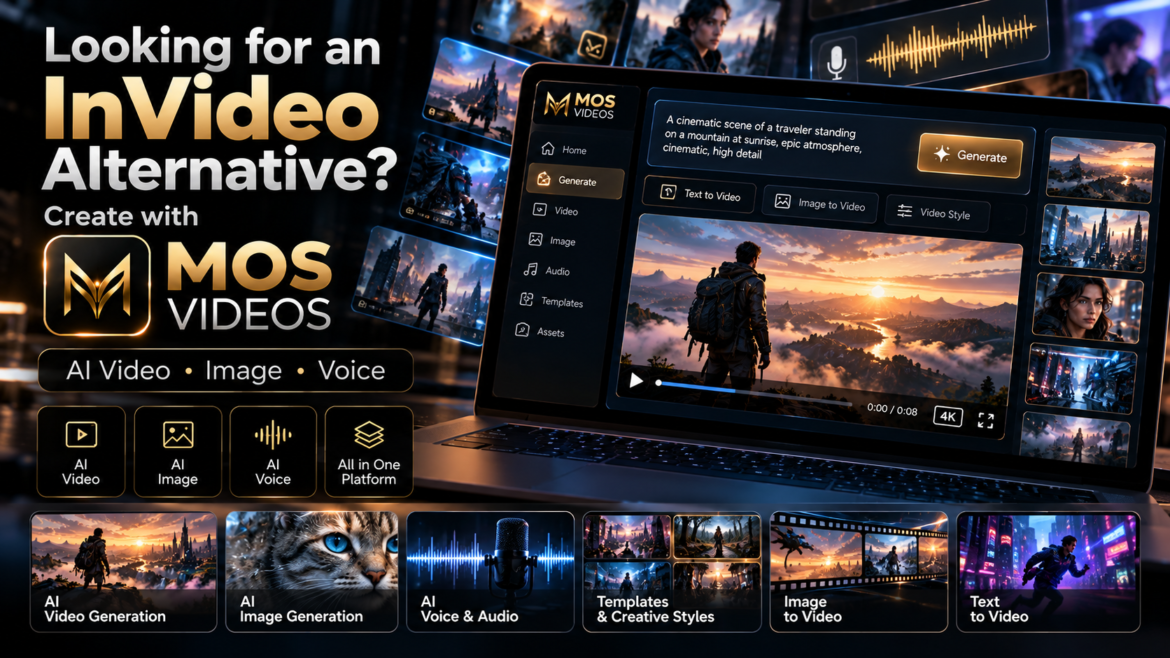
Looking for an InVideo Alternative? Discover MOS Videos for AI Video Creation

by admin outubro 8, 2026
written by admin

AI video creation has changed dramatically.

Platforms such as InVideo have helped make prompt-based video production easier to understand by showing creators that a simple idea, script, or instruction can become the foundation for a complete video workflow.

InVideo currently promotes workflows that can move from prompts and scripts into generated scenes, voiceovers, editing, and finished video production. Ajuda InVideo

For creators exploring this new way of producing content, there is another platform worth discovering:

MOS Videos.

MOS Videos is built around generative content creation across video, image, voice, audio, and multimodal AI workflows.

If you already understand the idea behind AI video platforms such as InVideo, MOS Videos gives you another way to turn creative concepts into visual content using artificial intelligence.


What Is InVideo AI?

InVideo is an AI-powered video creation platform designed to help users turn ideas, prompts, scripts, and other inputs into video content.

Its current platform combines AI generation with tasks such as:

  • Script development
  • Storyboarding
  • Video generation
  • Voiceover
  • Editing
  • Timeline-based production
  • Image, video, and audio generation

InVideo also describes its newer workflow as agent-based, where AI systems can help plan, generate, and edit content across a project. Ajuda InVideo

That makes InVideo a useful reference point for anyone trying to understand the new generation of AI video platforms.

But it is not the only way to approach generative content.


What Is MOS Videos?

MOS Videos is an AI-powered creative platform designed around generative video, image, voice, audio, and multimedia content creation.

The platform is built for users who want to move from an idea to visual content using artificial intelligence.

That can include workflows such as:

Text → Image

Text → Video

Image → Video

Script → Voice

Voice → Talking Video

Translation → Multilingual Video

Instead of thinking only about one type of media, MOS Videos focuses on a broader creative ecosystem.


MOS Videos and the New Generation of AI Video Creation

AI video platforms are becoming less about traditional manual editing and more about creative direction.

The user provides:

  • An idea
  • A prompt
  • A script
  • A reference image
  • A creative instruction

The AI helps transform that direction into visual media.

InVideo follows this broader trend by allowing creators to describe what they want and use AI to generate and edit video. invideo

MOS Videos operates within this same new generation of creative AI, but with a strong focus on connecting different media types inside broader generative workflows.


Create Videos from Text with MOS Videos

One of the most important AI video workflows is Text-to-Video.

Instead of starting with footage, the creator begins with language.

For example:

A futuristic city at night, flying vehicles between skyscrapers, cinematic camera movement, realistic reflections, dramatic neon lighting.

That prompt becomes the creative direction for the generated video.

Text-to-Video AI can support:

  • Cinematic scenes
  • Social media videos
  • Marketing content
  • Visual storytelling
  • Creative experiments
  • Product concepts
  • AI filmmaking

MOS Videos allows creators to think of text as the beginning of video production.


Turn Images into Videos

Creators can also begin with an image.

This is especially useful when the visual identity of the scene is already defined.

A typical workflow might be:

Generate an AI Image

↓

Choose the Best Visual

↓

Use Image-to-Video

↓

Add Motion

↓

Create the Final Scene

This allows creators to establish:

  • Character appearance
  • Environment
  • Lighting
  • Composition
  • Color
  • Visual style

before introducing motion.


AI Image Generation with MOS Videos

MOS Videos is not limited to video.

AI image generation can become the first stage of a larger project.

Creators can generate:

  • Characters
  • Product scenes
  • Environments
  • Marketing visuals
  • Concept art
  • Cinematic frames
  • Social content

The generated image can then become part of an AI video workflow.

This creates a simple creative path:

Prompt → Image → Video


AI Voice and Audio Creation

Modern video creation also depends heavily on sound.

MOS Videos supports broader workflows involving voice and audio, helping creators connect the visual and spoken parts of a project.

This can support:

  • Narration
  • Talking videos
  • AI presenters
  • Voice-driven content
  • Multilingual videos
  • Educational content
  • Marketing

The result is a more complete content creation workflow.


InVideo vs MOS Videos: Understanding the Difference

The goal here is not to declare one platform universally better than the other.

They can serve creators with different workflows and preferences.

InVideo currently emphasizes an agentic workflow that can write, storyboard, generate, and edit video projects while integrating multiple AI models and timeline editing. Ajuda InVideo

MOS Videos is positioned around a connected generative ecosystem where users can work across:

  • AI image generation
  • AI video generation
  • Image-to-video
  • AI voice
  • AI audio
  • Lip sync
  • Talking-head video
  • Translation
  • Multilingual creation

For creators evaluating AI video platforms, the important question is not simply:

“Which tool generates video?”

It is:

“Which workflow fits the way I want to create?”


Why Creators Look for InVideo Alternatives

Creators often explore alternatives because different platforms prioritize different workflows.

Some users may want:

  • More generative media options
  • Different creative models
  • Different interfaces
  • Image and video workflows
  • AI voice tools
  • Talking-video creation
  • Multilingual content
  • More experimentation

That is where MOS Videos becomes relevant.

It gives creators another environment for working with generative media.


MOS Videos for Content Creators

MOS Videos can support creators producing:

  • YouTube videos
  • Shorts
  • TikTok
  • Instagram Reels
  • Educational content
  • Faceless videos
  • AI storytelling
  • Technology videos
  • Cinematic experiments

A creator can combine different AI-generated assets inside one project.

For example:

Script

↓

AI Voice

↓

AI Images

↓

AI Video

↓

Final Content


MOS Videos for Social Media

Social media requires constant visual production.

Creators often need new:

  • Clips
  • Scenes
  • Backgrounds
  • Product visuals
  • Short videos
  • Creative concepts

AI generation can make this process more flexible.

Instead of relying only on pre-existing footage, creators can build visuals specifically for a post or campaign.


MOS Videos for Marketing

Marketing teams can use generative AI to explore more creative directions.

MOS Videos can fit workflows involving:

  • Product promotions
  • Campaign concepts
  • Social advertisements
  • Brand storytelling
  • Visual prototypes
  • Product scenes
  • AI-generated promotional content

A campaign can begin as a written idea and gradually become visual.


MOS Videos for AI Filmmaking

AI filmmaking is another area where generative platforms are becoming increasingly useful.

Creators can experiment with:

  • Storyboards
  • Concept scenes
  • Characters
  • Environments
  • Cinematic shots
  • Visual effects
  • Previsualization

This gives independent creators new ways to explore film-like content without beginning every concept with a physical production.


MOS Videos for Faceless Content

Faceless creators often rely on:

  • Voiceover
  • Stock footage
  • Graphics
  • Animation
  • B-roll

Generative AI expands those options.

Instead of using only generic footage, creators can generate custom scenes based on the topic of the video.

For example:

A documentary about futuristic cities could include AI-generated urban environments created specifically for the script.


Build Talking Videos with AI

MOS Videos can also be part of talking-video workflows.

A creator may begin with:

  • A portrait
  • AI-generated face
  • Avatar
  • Character

Then add:

  • Script
  • AI voice
  • Facial animation
  • Lip sync

The result is a talking digital presenter.

This can support marketing, education, social media, and faceless content.


Create Multilingual Content

Video audiences are global.

Creators may want the same content available in more than one language.

AI-powered workflows can combine:

Translation

↓

AI Voice

↓

Lip Sync

↓

Localized Video

This creates new opportunities for creators who want to reach audiences beyond their original language.


One Idea, Multiple Creative Outputs

One of the most useful ways to think about MOS Videos is not as a single-purpose generator.

Think of it as a creative chain.

An idea might become:

Text

↓

Image

↓

Video

↓

Voice

↓

Localized Version

↓

Final Content

This is where multimodal AI becomes especially powerful.


InVideo Shows What AI Video Can Become

Platforms such as InVideo have helped demonstrate that modern AI video creation can involve much more than generating a single short clip.

Its current tools emphasize workflows where AI can help with scripting, storyboards, scenes, editing, voices, and full production. Ajuda InVideo

For users already familiar with that concept, MOS Videos represents another way to explore AI-powered creative production.


Why Consider MOS Videos?

MOS Videos is designed for creators who want to experiment across several forms of generative content.

Instead of focusing only on the final video, users can work with the individual components that make the video possible.

That includes:

  • Images
  • Video
  • Voice
  • Audio
  • Characters
  • Animation
  • Translation
  • Lip sync

This gives creators more ways to develop a concept.


From Prompt to Complete Content

Imagine starting with:

A futuristic entrepreneur presenting a new technology inside a dark premium studio.

That idea could become:

AI-generated presenter

↓

AI voice

↓

Talking video

↓

Product scenes

↓

Background visuals

↓

Final promotional video

This is what connected generative creation makes possible.


MOS Videos as an AI Creative Platform

The broader value of MOS Videos is the ability to think beyond individual outputs.

You are not only generating an image.

You are creating an asset that can become video.

You are not only generating a voice.

You are creating audio that can become part of a talking presenter.

You are not only generating a video.

You are building material that can become part of a campaign, story, channel, or larger production.


Who Is MOS Videos For?

MOS Videos can be useful for:

  • Content creators
  • YouTubers
  • Social media creators
  • Marketers
  • Agencies
  • Designers
  • Filmmakers
  • Entrepreneurs
  • Educators
  • Businesses
  • AI creators

Anyone exploring generative media can use the platform as part of a modern content production workflow.


InVideo Alternative for Creators Exploring Generative AI

If you are searching for an InVideo alternative, you are probably already interested in making video creation more AI-driven.

You may want to:

  • Generate scenes from prompts
  • Create videos faster
  • Build visual concepts
  • Work with AI-generated media
  • Create social content
  • Experiment with new creative workflows

MOS Videos is designed for exactly this new generation of creators.


Why MOS Videos Is More Than an AI Video Generator

Video generation is only one part of modern generative content.

A complete digital project may require:

Video + Image + Voice + Audio + Animation + Translation

MOS Videos brings these creative possibilities into a broader ecosystem.

That makes it relevant not only for people looking for an AI video generator, but for creators building complete multimedia experiences.


Explore AI Video Creation with MOS Videos

If platforms such as InVideo introduced you to the idea of creating video through AI, MOS Videos gives you another creative direction to explore.

Start from a prompt.

Generate the image.

Create the scene.

Add the voice.

Animate the character.

Build the final video.

The goal is simple:

Turn ideas into content with fewer barriers between imagination and production.

With MOS Videos, generative AI becomes part of your creative workflow.

Key Takeaways

  • InVideo is a useful reference for understanding modern prompt-driven AI video creation and currently combines generation, scripting, voice, editing, and AI-assisted workflows. Ajuda InVideo
  • MOS Videos offers a generative workflow centered on video, image, voice, audio, and multimodal content creation.
  • Creators can use MOS Videos for Text-to-Video and Image-to-Video workflows.
  • AI images can become source material for generated videos.
  • Voice, lip sync, talking avatars, and translation can become part of broader video workflows.
  • MOS Videos is positioned as an option for creators looking beyond a single AI video-generation function.

Frequently Asked Questions

What is InVideo AI?

InVideo is an AI-powered video creation platform that can help users move from prompts or scripts into scenes, voiceovers, editing, and finished video workflows. Its current platform also uses AI agents and multiple generation models. Ajuda InVideo

Is MOS Videos an InVideo alternative?

MOS Videos can be considered an alternative for creators exploring AI-powered video and multimedia generation. Its focus includes AI video, images, voice, audio, talking content, and broader multimodal creative workflows.

Can MOS Videos create videos from text?

MOS Videos supports Text-to-Video-oriented workflows where written prompts can become the creative foundation for generated video content.

Can MOS Videos turn images into videos?

Image-to-Video workflows allow creators to use an existing or AI-generated image as the visual starting point for video creation.

Can MOS Videos generate AI images?

Yes. AI image creation is part of the broader MOS Videos generative content workflow.

Is MOS Videos only for video generation?

No. MOS Videos is positioned around a broader creative ecosystem involving video, images, voice, audio, translation, lip sync, and other AI-powered content workflows.

Who should use MOS Videos?

MOS Videos can support creators, marketers, businesses, filmmakers, designers, agencies, educators, and users interested in AI-powered content creation.

Why consider MOS Videos if I already know InVideo?

If you already understand the prompt-driven workflow popularized by tools such as InVideo, MOS Videos gives you another environment for exploring AI video, images, voice, audio, and connected generative-media workflows.
outubro 8, 2026 0 comments
0 FacebookTwitterPinterestEmail
IAAI VideoVídeo

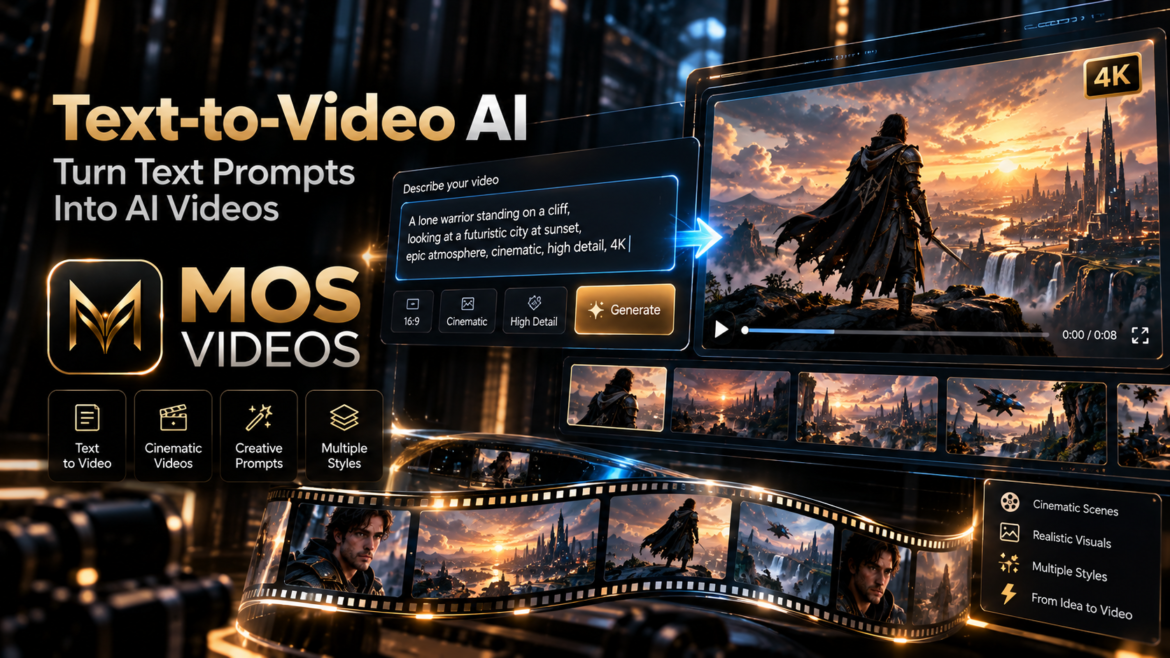
Text-to-Video AI: Turn Prompts Into Videos with MOS Videos

by admin outubro 7, 2026
written by admin

Ideas used to stay as ideas until someone had the time, equipment, budget, and production resources to turn them into video.

That is changing.

Text-to-Video AI allows creators to transform written prompts into moving visual content using artificial intelligence.

A sentence can become a scene.

A concept can become a cinematic sequence.

A written description can become video.

With MOS Videos, creators can use text as the starting point for AI-powered video generation and build visual content from simple creative instructions.

Instead of asking:

“How do I film this?”

Creators can begin with:

“How do I describe this?”

That shift is what makes Text-to-Video AI so powerful.


What Is Text-to-Video AI?

Text-to-Video AI is a generative artificial intelligence technology that creates video content from written prompts.

Users describe the scene they want to create, and the AI generates moving visual content based on that description.

A prompt may include:

  • Subject
  • Action
  • Environment
  • Camera movement
  • Lighting
  • Mood
  • Style
  • Visual composition

For example:

A futuristic motorcycle moving through a neon city at night, cinematic tracking shot, wet streets, realistic reflections, dramatic lighting.

The AI interprets those instructions and turns them into video.


How Does Text-to-Video AI Work?

Text-to-Video AI combines language understanding with generative video technology.

A simplified workflow looks like this:

Text Prompt

↓

AI Interpretation

↓

Scene Generation

↓

Motion Creation

↓

Video Output

The AI analyzes the meaning of the prompt and identifies visual concepts.

Then it generates frames that attempt to represent:

  • What is in the scene
  • What is moving
  • How the camera behaves
  • What the lighting looks like
  • What visual style should be used

This allows written language to become part of the video production process.


Turn a Simple Prompt Into Video

A very simple prompt might be:

A car driving at night.

That can work, but it gives the AI very little direction.

A stronger prompt could be:

A black futuristic sports car driving through a neon-lit city at night, low-angle cinematic tracking shot, wet streets reflecting lights, realistic motion, dramatic atmosphere.

The second prompt gives the AI much more context.

It explains:

  • The subject
  • The environment
  • The time
  • The camera
  • The lighting
  • The mood
  • The style

This usually gives the creator more control over the result.


How to Write a Better Text-to-Video Prompt

A practical structure is:

Subject + Action + Environment + Camera + Lighting + Style

For example:

A futuristic explorer walking through an abandoned city, slow tracking shot, dust moving through the air, dramatic sunset lighting, photorealistic cinematic style.

This structure is simple enough to use quickly but detailed enough to communicate creative intent.


1. Define the Subject

Start by describing the main focus of the scene.

Examples:

  • A futuristic soldier
  • A sports car
  • A robot
  • A woman in a cyberpunk city
  • A spacecraft
  • A luxury product

The subject should be clear.


2. Add the Action

Video needs movement.

Describe what is happening.

Examples:

  • Walking
  • Running
  • Flying
  • Driving
  • Turning toward the camera
  • Moving through a city
  • Opening a door
  • Looking at the horizon

Action gives the scene energy.


3. Describe the Environment

Explain where the scene takes place.

Examples:

  • Futuristic city
  • Desert
  • Luxury studio
  • Alien planet
  • Tropical beach
  • Medieval castle
  • Modern office

The environment helps define the visual world.


4. Add Camera Direction

Camera movement can change the entire feeling of the video.

Useful terms include:

  • Tracking shot
  • Dolly forward
  • Slow zoom
  • Drone shot
  • Wide shot
  • Close-up
  • Orbiting camera
  • Low-angle shot

For example:

Slow cinematic tracking shot following the subject.

This tells the AI how the scene should be visually presented.


5. Define the Lighting

Lighting can create atmosphere.

Examples:

  • Cinematic lighting
  • Golden hour
  • Neon lighting
  • Soft studio lighting
  • Dramatic shadows
  • Moonlight
  • Volumetric light

For example:

Warm golden-hour lighting with long cinematic shadows.

This gives the scene a stronger visual direction.


6. Define the Style

The final prompt can also describe the visual style.

Examples:

  • Photorealistic
  • Cinematic
  • Documentary
  • Futuristic
  • Fantasy
  • Minimalist
  • Surreal
  • Luxury commercial

Style helps determine the overall look and feel.


Text-to-Video AI for Content Creators

Content creators can use Text-to-Video AI to generate visual scenes for:

  • YouTube
  • TikTok
  • Instagram Reels
  • Shorts
  • Storytelling
  • Faceless content
  • Educational videos
  • Creative projects

Instead of searching endlessly for footage that matches an idea, creators can generate visual content designed specifically for the script or concept.


Text-to-Video AI for YouTube

YouTube creators can integrate AI-generated video into many formats.

Examples include:

  • Documentaries
  • Technology channels
  • Storytelling
  • Educational videos
  • Faceless channels
  • AI filmmaking
  • Visual essays
  • Tutorials

Text-to-Video AI can be used to create scenes that support narration.

For example:

Script

↓

Scene Prompt

↓

AI Video

↓

Voiceover

↓

Final YouTube Video

This creates a more visual production workflow.


Text-to-Video AI for Social Media

Social media content needs to capture attention quickly.

AI-generated video can help create unusual or visually strong scenes.

Creators can generate:

  • Cinematic clips
  • Visual hooks
  • Product scenes
  • Fantasy concepts
  • Futuristic environments
  • Short narrative sequences

These videos can then become part of Reels, Shorts, and TikTok content.


Text-to-Video AI for Marketing

Marketing teams can also benefit from prompt-based video creation.

Potential use cases include:

  • Advertising concepts
  • Product campaigns
  • Brand visuals
  • Promotional videos
  • Social ads
  • Creative prototypes

A written idea can become a visual concept before larger production decisions are made.

This makes generative video useful not only for final content, but also for experimentation.


Text-to-Video AI for Storytelling

Storytelling is one of the strongest use cases for generative video.

A creator can write:

A lone traveler enters an abandoned futuristic city at sunrise.

That sentence can become the foundation for a visual scene.

A full story can be divided into multiple prompts.

For example:

Scene 1: Arrival
Scene 2: Discovery
Scene 3: Conflict
Scene 4: Resolution

Each scene can become a separate AI-generated video sequence.

This gives independent creators new ways to visualize narratives.


Text-to-Video AI for AI Filmmaking

Generative video can support modern filmmaking workflows.

AI can be used for:

  • Concept scenes
  • Previsualization
  • Experimental shots
  • Environment creation
  • Visual storytelling
  • Camera tests
  • Scene development

The creative direction still comes from the creator.

The AI helps transform that direction into visual output.


Text-to-Video AI vs Traditional Video Production

Both methods have different strengths.

Text-to-Video AITraditional Video Production
Starts with a promptStarts with filming
AI generates the sceneCamera captures real footage
Useful for impossible or fictional visualsBest for real-world scenes
Fast concept testingPrecise physical production
Flexible visual experimentationGreater manual control

Creators can also combine both.

AI-generated scenes can be mixed with traditional footage.


Text-to-Video AI vs Image-to-Video AI

These workflows are related but different.

Text-to-Video AI starts from written instructions.

Image-to-Video AI starts from a visual reference.

Text-to-Video is useful when the creator wants the AI to design the initial visual scene.

Image-to-Video is useful when the creator already knows exactly how the scene should look.

A combined workflow can be:

Text Prompt

↓

AI Image

↓

Image-to-Video

This gives creators even more control.


Text-to-Video AI and Prompt Engineering

Prompt engineering is one of the most important skills in generative video.

Small changes in wording can affect the result.

Compare:

A man walking in a city.

with:

A man wearing a dark coat walking through a futuristic city during heavy rain, slow cinematic tracking shot, neon reflections, dramatic lighting, photorealistic style.

The second prompt communicates a much clearer creative direction.


Create Cinematic Videos from Text

Cinematic video generation often depends on combining several visual instructions.

A strong cinematic prompt can include:

  • Subject
  • Camera motion
  • Lighting
  • Atmosphere
  • Environment
  • Color direction
  • Visual style

For example:

Slow aerial shot above a futuristic coastal city at sunset, flying vehicles between glass towers, golden cinematic lighting, atmospheric clouds, realistic motion.

This describes not only what happens, but how the scene should feel.


Create Product Videos from Text

Text-to-Video AI can also support product visualization.

For example:

A luxury black smartwatch rotating slowly in a dark premium studio, gold reflections, cinematic product lighting, high-end commercial style.

This can help brands experiment with visual concepts without requiring a physical shoot for every idea.


Create Advertising Concepts with AI

Advertising often begins with concepts.

Text-to-Video AI can turn those concepts into early visual prototypes.

A marketing team can test:

  • Different environments
  • Different products
  • Different moods
  • Different camera styles
  • Different brand directions

This can accelerate creative exploration.


Text-to-Video AI for Faceless Content

Faceless creators often need visuals that support narration.

AI video generation can be especially useful for:

  • Story channels
  • Educational channels
  • Documentary content
  • Motivational videos
  • Technology content
  • Historical storytelling

The creator can generate specific scenes rather than relying only on generic stock footage.


From Script to AI Video

One useful workflow is:

Write the Script

↓

Divide the Script into Scenes

↓

Write a Prompt for Each Scene

↓

Generate AI Videos

↓

Add Voiceover

↓

Edit the Final Video

This turns a written script into a visual production plan.


Text-to-Video AI and AI Voice

Text-to-Video becomes even more powerful when combined with AI voice generation.

A creator can write a script.

Generate the narration.

Create visual scenes from the same script.

Then combine both.

The workflow becomes:

Script

↓

AI Voice

↓

Text-to-Video

↓

Editing

↓

Final Content

This is a strong example of multimodal AI creation.


Text-to-Video AI and AI Audio

Audio gives generated video more impact.

A complete production may include:

  • Narration
  • Music
  • Sound effects
  • Ambient audio

This means AI video creation does not need to stop at the visual layer.

It can become part of a complete multimedia workflow.


Text-to-Video AI and MOS Videos

MOS Videos is designed around connected generative workflows.

Text-to-Video AI can become the starting point for content that later includes:

  • AI images
  • AI voice
  • AI audio
  • Lip sync
  • Talking avatars
  • Translation
  • Multilingual content

This allows creators to build more complete projects instead of generating isolated clips.


Create Videos from Prompts with MOS Videos

The process begins with a simple creative direction.

For example:

A futuristic athlete training alone inside a dark high-tech gym, dramatic cinematic lighting, slow tracking shot.

That idea can become a generated video.

From there, creators can continue developing the project with:

  • Voice
  • Audio
  • Additional scenes
  • Images
  • Editing
  • Localization

MOS Videos helps turn prompts into part of a broader creative process.


Why Use MOS Videos for Text-to-Video AI?

MOS Videos is designed for creators who want to move between different forms of generative media.

A project may begin as text but eventually require:

  • Video
  • Images
  • Voice
  • Audio
  • Characters
  • Translation

Instead of treating these as completely separate creative stages, MOS Videos supports a more connected workflow.


Create More Than One Scene

Text-to-Video AI becomes much more useful when creators think beyond a single generation.

A complete video may contain several AI-generated scenes.

For example:

Scene 1: Establishing shot
Scene 2: Character introduction
Scene 3: Main action
Scene 4: Close-up
Scene 5: Final cinematic shot

Each scene can use a separate prompt.

This creates a more structured and intentional production.


Text-to-Video AI and the Future of Content Creation

Natural language is becoming a creative interface.

Creators can increasingly describe what they want and work with artificial intelligence to generate visual media.

This changes the role of video creation.

The creator becomes more like a director.

They define:

  • The idea
  • The scene
  • The mood
  • The camera
  • The story
  • The final selection

The AI helps generate the raw visual material.


Turn Your Ideas Into Video with MOS Videos

Every video starts with an idea.

Text-to-Video AI shortens the distance between that idea and the visual result.

Write the prompt.

Define the scene.

Generate the video.

Refine the concept.

Build the final content.

With MOS Videos, text can become the beginning of a complete generative media workflow.

Describe the idea.

Generate the scene.

Create with MOS Videos.

Key Takeaways

  • Text-to-Video AI turns written prompts into video content.
  • Strong prompts define subject, action, environment, camera, lighting, and style.
  • Text-to-Video AI can support YouTube, social media, marketing, storytelling, and filmmaking.
  • Prompt engineering gives creators greater control over generated scenes.
  • Text-to-Video can be combined with AI image, voice, and audio workflows.
  • MOS Videos supports a broader creative ecosystem around AI-generated video.

Frequently Asked Questions

What is Text-to-Video AI?

Text-to-Video AI is generative artificial intelligence technology that creates moving visual content based on written prompts.

How does Text-to-Video AI work?

The AI analyzes a prompt, identifies visual concepts such as subjects, environments, movement, lighting, and style, and generates a video based on those instructions.

How do I create a video from text with AI?

Write a detailed prompt describing what should appear in the scene, what should happen, how the camera should move, and what visual style you want, then use a Text-to-Video AI generator to create the video.

What makes a good Text-to-Video prompt?

A useful prompt typically includes the subject, action, environment, camera movement, lighting, atmosphere, and visual style.

Can Text-to-Video AI create cinematic videos?

Yes. Prompts can include cinematic camera movements, lighting, composition, and visual style to guide the generation toward a more cinematic result.

Can Text-to-Video AI be used for YouTube?

Yes. It can support documentary content, storytelling, faceless channels, educational videos, technology content, and other YouTube formats.

What is the difference between Text-to-Video and Image-to-Video?

Text-to-Video begins from written instructions, while Image-to-Video begins from an existing image used as the visual reference.

How does MOS Videos fit into Text-to-Video AI?

MOS Videos supports generative workflows involving AI video, images, voice, audio, and other media, allowing Text-to-Video creation to become part of a broader multimedia production process.

outubro 7, 2026 0 comments
0 FacebookTwitterPinterestEmail
IAAI VideoImagemVídeo

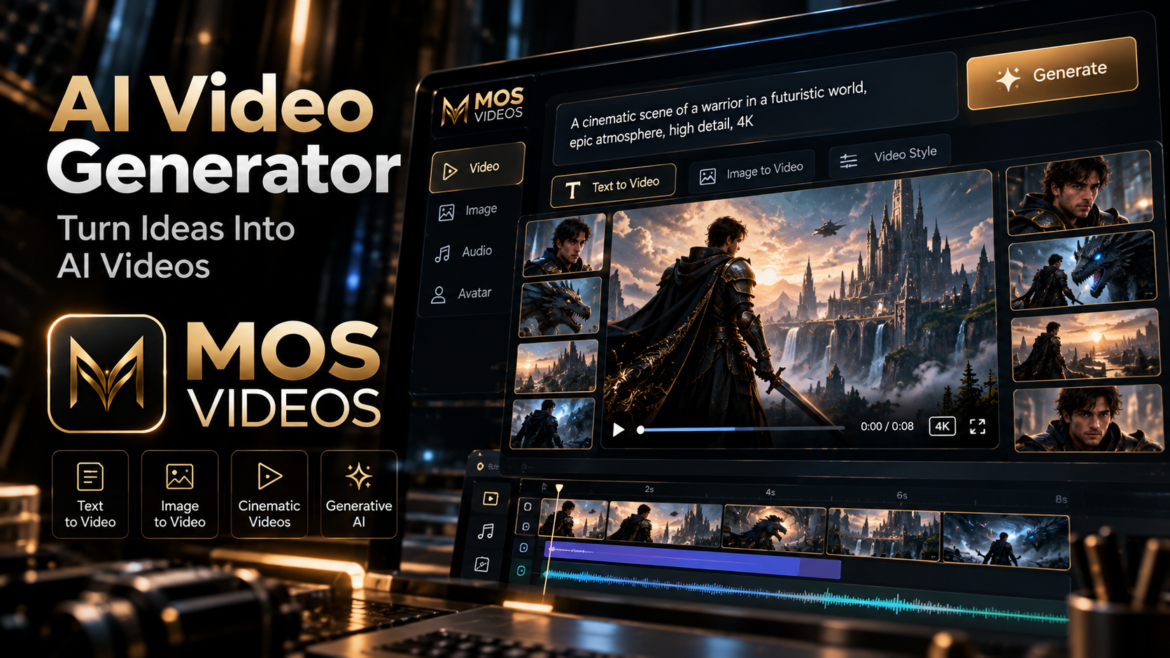
AI Video Generator: Create Videos with AI Using MOS Videos

by admin outubro 6, 2026
written by admin

Video creation is no longer limited to cameras, complex production setups, or traditional editing workflows.

With an AI Video Generator, creators can turn ideas, prompts, and images into moving visual content using artificial intelligence.

A simple description can become a cinematic scene.

A static image can become an animated video.

A creative concept can become social content, marketing material, storytelling, or visual experimentation.

With MOS Videos, AI video generation becomes part of a broader creative workflow designed for modern creators.

Instead of starting with technical complexity, you can start with the most important part:

the idea.

Describe it.

Visualize it.

Generate it.


What Is an AI Video Generator?

An AI Video Generator is a tool that uses artificial intelligence to create video content from inputs such as text prompts, images, or other visual references.

Instead of recording every scene manually, users can describe what they want to create.

For example:

A futuristic sports car driving through a neon city at night, cinematic tracking shot, realistic reflections, dramatic lighting.

The AI interprets the prompt and generates moving visual content based on that creative direction.

This gives creators a new way to produce video.


Create Videos from Text with AI

One of the most powerful AI video workflows is Text-to-Video AI.

The user describes the scene using natural language.

For example:

A spacecraft flying above an alien planet during sunrise, cinematic wide shot, realistic clouds, dramatic atmosphere.

The AI uses that description as the creative foundation for the generated video.

Text-to-video generation can be useful when you want to create something that does not yet exist visually.

This could include:

  • Futuristic cities
  • Fantasy worlds
  • Product concepts
  • Cinematic environments
  • Fictional characters
  • Abstract visual scenes
  • Marketing concepts

The prompt becomes the starting point for production.


Turn Images into Videos with AI

Another powerful workflow is Image-to-Video AI.

Instead of starting only with text, users begin with an image.

The image establishes:

  • Character appearance
  • Composition
  • Environment
  • Lighting
  • Visual style
  • Color direction

The AI can then introduce movement.

For example:

A still image of a futuristic city can become a cinematic sequence with moving lights, atmospheric fog, traffic, and camera motion.

This creates a workflow like:

AI Image

↓

Image-to-Video

↓

AI Video

This approach can offer more visual control because the creator already defines the starting frame.


AI Video Generator for Content Creators

Creators constantly need new visual content.

AI video generation can support:

  • YouTube
  • TikTok
  • Instagram Reels
  • YouTube Shorts
  • Social media campaigns
  • Faceless content
  • Storytelling
  • Educational content
  • Creative experiments

Instead of relying only on stock footage or existing clips, creators can generate scenes specifically for their ideas.

That can make content feel more original and visually distinctive.


AI Video Generator for YouTube

YouTube creators can integrate AI-generated video into many formats.

Examples include:

  • Documentary-style videos
  • Educational channels
  • AI storytelling
  • Technology videos
  • Faceless channels
  • Tutorials
  • Cinematic videos
  • Concept videos

AI-generated scenes can be combined with:

  • Narration
  • Music
  • B-roll
  • Graphics
  • Subtitles
  • Traditional footage

The result does not have to be completely AI-generated.

AI can simply become another creative tool inside the production process.


AI Video Generator for Social Media

Short-form content depends heavily on visual impact.

AI-generated video can help creators build scenes designed specifically for:

  • TikTok
  • Instagram
  • Reels
  • Shorts
  • Promotional clips
  • Viral concepts

A creator can test several visual directions before choosing the final result.

This makes generative video particularly useful for experimentation.


AI Video Generator for Marketing

Marketing teams often need multiple creative concepts.

Instead of producing every idea physically, AI video generation can help visualize campaigns before larger production begins.

Potential use cases include:

  • Product advertising
  • Brand storytelling
  • Promotional videos
  • Social campaigns
  • Product demonstrations
  • Creative concepts
  • Digital advertisements

A simple idea can become a visual prototype much faster.


Generate Cinematic AI Videos

AI video generation is especially useful for creators who want cinematic visual styles.

Prompts can describe:

  • Camera movement
  • Lens style
  • Lighting
  • Environment
  • Mood
  • Action
  • Composition

For example:

Slow cinematic tracking shot following a woman through a futuristic city, rain falling, neon reflections, dramatic lighting, realistic movement.

The more clearly the prompt describes the visual intent, the easier it becomes to guide the creative direction.


How to Write Better AI Video Prompts

A useful AI video prompt structure is:

Subject + Action + Environment + Camera + Lighting + Style

For example:

A black sports car accelerating through a futuristic city at night, low-angle tracking shot, wet streets reflecting neon signs, cinematic lighting, photorealistic style.

This tells the AI:

  • What the subject is
  • What it is doing
  • Where it is
  • How the camera moves
  • What the lighting looks like
  • What visual style is desired

Good prompting is one of the most important skills in AI video creation.


Text-to-Video vs Image-to-Video

Both workflows can generate AI video, but they solve different creative problems.

Text-to-VideoImage-to-Video
Starts with textStarts with an image
AI creates the initial sceneCreator defines the initial frame
Useful for ideas from scratchUseful for visual consistency
High creative freedomStronger visual reference
Prompt controls appearance and motionImage controls appearance, prompt controls motion

Creators can use both inside the same project.


Create AI Images Before Creating Video

One effective workflow is to create the visual concept first.

For example:

Text Prompt

↓

AI Image Generator

↓

Choose Best Image

↓

Image-to-Video

↓

Final Video

This allows creators to decide exactly how the scene should look before introducing movement.

It can be especially useful for:

  • Characters
  • Product scenes
  • Cinematic environments
  • Storytelling
  • Branded visuals

AI Video Generator for Storytelling

Generative video opens interesting possibilities for storytelling.

Creators can generate:

  • Establishing shots
  • Characters
  • Environments
  • Fantasy scenes
  • Science-fiction scenes
  • Dramatic transitions
  • Visual sequences

A written story can gradually become visual.

For example:

Story Idea

→ Character

→ Scene

→ AI Video

→ Narration

→ Final Story

This gives independent creators access to new forms of visual experimentation.


AI Video Generator for Product Content

Businesses can also use AI-generated video to explore product presentation.

Possible applications include:

  • Product concepts
  • Advertising
  • Promotional visuals
  • Lifestyle scenes
  • Campaign ideas
  • Social content

A product can be placed inside environments that would otherwise require larger production setups.

This can help teams experiment with different creative directions.


AI Video Generator for AI Filmmaking

AI filmmaking combines generative tools with traditional filmmaking skills.

AI can support:

  • Concept art
  • Previsualization
  • Storyboarding
  • Scene generation
  • Visual effects
  • Experimental shots
  • Environment creation

The filmmaker still controls the creative vision.

AI simply expands the range of available tools.


Why Creators Are Using AI Video Generation

AI video generation provides several advantages.

Faster Experimentation

Creators can explore multiple visual ideas quickly.

More Creative Freedom

Scenes do not always need to exist physically.

Flexible Production

Images, text, and video can become connected.

Visual Prototyping

Ideas can be tested before larger production begins.

New Storytelling Possibilities

Creators can visualize concepts that would otherwise be difficult to produce.


AI Video Generation and Multimodal Content

Modern generative content increasingly combines multiple media formats.

A project might involve:

Text

↓

AI Image

↓

AI Video

↓

AI Voice

↓

Audio

↓

Final Content

This is known as a multimodal creative workflow.

Instead of using AI for only one task, creators combine several technologies into one production process.


Create AI Videos with MOS Videos

MOS Videos is designed for creators who want to work across generative media.

AI video generation can become part of a larger workflow involving:

  • AI images
  • AI video
  • Image-to-video
  • Voice
  • Audio
  • Lip sync
  • Talking videos
  • Multilingual content

This allows creators to move between different forms of content while keeping the creative process connected.


From Idea to AI Video with MOS Videos

A project can begin with a simple concept.

For example:

A futuristic explorer walking through an abandoned city.

From there:

Write the Prompt

↓

Generate the Visual

↓

Create the Video

↓

Add Voice or Audio

↓

Build the Final Content

The entire process begins with an idea rather than complicated production infrastructure.


Why Use MOS Videos for AI Video Creation?

MOS Videos focuses on a broader creative workflow rather than treating video generation as an isolated feature.

Creators can explore different types of generative media within the same ecosystem.

This is useful because modern content rarely consists of only one asset.

A complete project may require:

  • Images
  • Video
  • Voice
  • Audio
  • Characters
  • Visual effects
  • Localization

MOS Videos helps connect these creative stages.


AI Video Generator for Modern Creators

The role of creators is changing.

Instead of manually producing every visual element, creators increasingly direct AI systems through ideas, prompts, references, and creative decisions.

This does not remove creativity.

It changes where creativity happens.

The creator becomes responsible for:

  • The idea
  • The visual direction
  • The story
  • The prompt
  • The selection
  • The editing
  • The final presentation

AI becomes part of the production toolkit.


Create More Than a Single AI Video

One generation can become the beginning of a larger project.

A video can become:

  • A social post
  • Part of a YouTube video
  • A campaign asset
  • A storytelling sequence
  • A product presentation
  • A cinematic project

The key is thinking beyond individual generations.

AI video becomes most powerful when it connects with a complete content strategy.

MOS Videos: AI Video Creation in a Bigger Creative Ecosystem

MOS Videos brings AI video creation together with other forms of generative content.

Start with text.

Generate an image.

Transform it into motion.

Add voice.

Create audio.

Develop the final story.

This is what makes multimodal AI workflows especially useful for modern creators.

Create the idea.

Generate the scene.

Turn it into video.

Build with MOS Videos.

Key Takeaways

  • An AI Video Generator creates video content using artificial intelligence.
  • Text-to-video allows creators to generate scenes from written prompts.
  • Image-to-video transforms static images into moving visual content.
  • AI video can support social media, marketing, YouTube, filmmaking, and storytelling.
  • Prompt quality plays an important role in guiding AI-generated video.
  • MOS Videos connects AI video generation with image, voice, audio, and other creative workflows.

Frequently Asked Questions

What is an AI Video Generator?

An AI Video Generator is a tool that uses artificial intelligence to create video content from text prompts, images, visual references, or other creative inputs.

Can AI generate videos from text?

Yes. Text-to-video AI allows users to describe a scene using natural language and generate moving visual content based on that description.

Can AI turn an image into a video?

Yes. Image-to-video AI can animate static images by creating movement, additional frames, camera motion, and environmental effects.

What can I create with an AI Video Generator?

AI video generators can support social media content, advertising, storytelling, product concepts, cinematic scenes, educational videos, YouTube content, and creative experimentation.

How do I write a good AI video prompt?

A strong prompt usually describes the subject, action, environment, camera movement, lighting, mood, and visual style.

Can AI video generation be used for marketing?

Yes. Marketing teams can use AI-generated video for campaign concepts, promotional content, advertising, social media, and visual prototyping.

Can AI images become AI videos?

Yes. AI-generated images can be used as source frames for image-to-video generation, creating a connected workflow between image and video creation.

What is MOS Videos?

MOS Videos is an AI-powered creative platform built around generative workflows involving video, image, voice, audio, and other multimedia content creation.

outubro 6, 2026 0 comments
0 FacebookTwitterPinterestEmail

Recent Posts

  • AI Video Editor: Create and Edit Videos with MOS Videos
  • Looking for an InVideo Alternative? Discover MOS Videos for AI Video Creation
  • Text-to-Video AI: Turn Prompts Into Videos with MOS Videos
  • AI Video Generator: Create Videos with AI Using MOS Videos
  • MOS Videos PRO: Generate AI Images and Videos in One Platform

Recent Comments

Nenhum comentário para mostrar.
  • Facebook
  • Twitter

© 2026 MOS Videos. All Rights Reserved. Developed by MOS Videos.


Back To Top
MOS Videos
  • Início
  • IA
  • Vídeo
  • Imagem
  • Ferramentas