MOS Videos
  • Início
  • IA
  • Vídeo
  • Imagem
  • Ferramentas
MOS Videos
keep your memories alive
Home - Image-to-Video AI
Tag:

Image-to-Video AI

VídeoAI VideoIAImagem

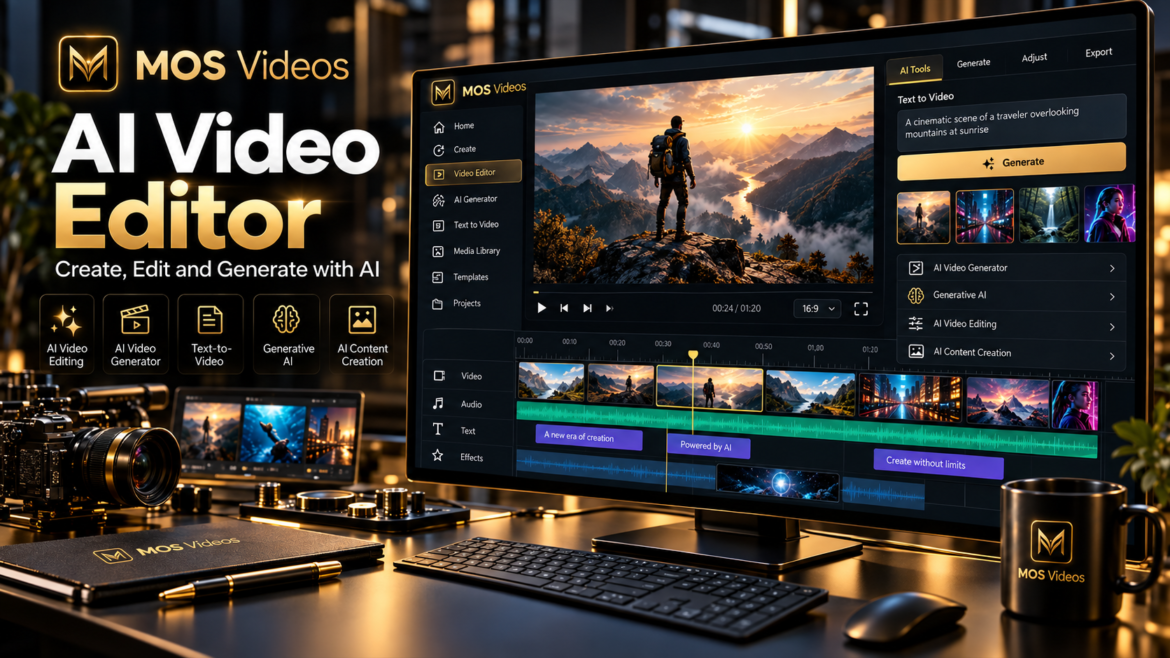
AI Video Editor: Create and Edit Videos with MOS Videos

by admin outubro 9, 2026
written by admin

Video creation is becoming faster, more flexible, and increasingly powered by artificial intelligence.

An AI Video Editor helps creators simplify parts of the video production process by using artificial intelligence to support editing, visual creation, scene development, and content workflows.

For creators, marketers, agencies, brands, and businesses, this means less time dealing with repetitive production steps and more time focused on the creative idea.

With MOS Videos, AI-powered video creation goes beyond traditional editing.

Creators can combine video generation, image creation, voice, audio, and other generative workflows inside a broader creative ecosystem.

The result is a more connected way to move from:

Idea → Visual → Video → Final Content


What Is an AI Video Editor?

An AI Video Editor is a video editing tool that uses artificial intelligence to automate, assist, or enhance parts of the editing and content creation process.

Depending on the platform, AI can help with tasks such as:

  • Creating video scenes
  • Generating visuals
  • Turning images into video
  • Building video concepts
  • Creating voiceovers
  • Generating talking videos
  • Supporting multilingual content
  • Automating parts of the creative workflow

The goal is not simply to replace traditional editing.

The goal is to make video creation more efficient and accessible.


How Does an AI Video Editor Work?

An AI Video Editor can analyze user instructions, media, prompts, and creative direction to assist with video production.

A simplified workflow might look like:

Idea

↓

Prompt

↓

AI-Generated Visuals

↓

Video Creation

↓

Editing

↓

Voice or Audio

↓

Final Content

Instead of manually creating every asset before editing begins, AI can help generate some of the content used inside the final video.

This changes the role of editing.

Creators are no longer limited to organizing existing footage.

They can also generate new footage.


AI Video Editing vs Traditional Video Editing

Traditional video editing usually starts with existing media.

The editor imports footage and then works with:

  • Cuts
  • Transitions
  • Audio
  • Color
  • Graphics
  • Effects

AI-powered editing can expand this workflow.

An AI Video Editor may help creators generate or modify content before, during, or after the editing process.

Traditional Video EditingAI Video Editing
Uses existing footageCan include generated footage
Manual editing workflowAI-assisted workflow
Requires separate visual assetsAI can help create assets
Focuses on post-productionCan support creation and post-production
Depends heavily on manual processesCan automate selected tasks

Both approaches can work together.


Why Use an AI Video Editor?

Video production can involve many different steps.

Creators may need to:

  • Write a script
  • Create visuals
  • Record voice
  • Find footage
  • Edit scenes
  • Add transitions
  • Add audio
  • Build final content

AI can help connect several of these stages.

This makes video creation more flexible.


AI Video Editor for Content Creators

Content creators often need to publish consistently.

That may mean producing content every week or even every day.

AI-powered workflows can help creators develop:

  • YouTube videos
  • Shorts
  • Reels
  • TikTok content
  • Tutorials
  • Storytelling
  • Faceless videos
  • Educational content

Instead of starting every project from zero, creators can use AI to generate visual material specifically for each video.


AI Video Editor for YouTube

YouTube creators can use AI throughout the production process.

For example:

Script

↓

AI Voice

↓

AI Images

↓

AI Video Scenes

↓

Editing

↓

Final YouTube Video

This can be useful for:

  • Educational channels
  • Technology channels
  • Documentary content
  • Faceless channels
  • Storytelling
  • Tutorials
  • Product content

AI becomes part of the editing workflow rather than a separate tool.


AI Video Editor for Social Media

Social media requires short, visually engaging content.

An AI Video Editor can support workflows for:

  • Instagram Reels
  • TikTok
  • YouTube Shorts
  • Promotional clips
  • Product videos
  • Social ads

AI-generated scenes can help creators produce original visual content instead of relying only on stock footage.


AI Video Editor for Marketing

Marketing teams often need many versions of the same creative idea.

This can include:

  • Social ads
  • Product videos
  • Campaign assets
  • Brand videos
  • Promotional clips
  • Landing-page videos

AI can help teams experiment with different visual directions.

One campaign idea can generate multiple scenes, visuals, and content variations.


AI Video Editor for Brands

Brands can use AI-assisted video creation to develop consistent visual communication.

Potential uses include:

  • Product launches
  • Brand storytelling
  • Social campaigns
  • Product demonstrations
  • Promotional content
  • Educational content
  • Customer communication

AI helps make it easier to explore more creative variations from the same concept.


Create AI Video Scenes Instead of Searching for Footage

Traditional editing often requires finding the right footage.

This can take time.

With generative AI, creators can potentially generate a visual scene that matches the script more closely.

For example:

Instead of searching for:

A futuristic city at night

the creator can generate:

A futuristic city at night with flying vehicles, cinematic camera movement, neon reflections, dramatic atmosphere.

This makes the visual content more aligned with the creative direction.


Text-to-Video Inside an AI Editing Workflow

Text-to-Video AI allows creators to generate scenes directly from prompts.

For example:

A futuristic entrepreneur walking through a premium technology studio, slow cinematic tracking shot, dramatic lighting.

The generated scene can then become part of a larger edited video.

This is one of the biggest differences between traditional video editing and generative video workflows.


Image-to-Video for Smarter Video Editing

Creators can also begin with images.

A workflow might look like:

AI Image

↓

Image-to-Video

↓

Animated Scene

↓

Editing

↓

Final Content

This can be useful when the creator wants strong control over the initial appearance of a scene.


AI Video Editor and AI Image Generation

Images can play an important role in video production.

Creators can generate:

  • Characters
  • Backgrounds
  • Product concepts
  • Cinematic frames
  • Visual references
  • Storyboards

These images can then be used inside the video workflow.

This connects image generation directly with editing.


AI Video Editor and AI Voice

Voice is another important part of modern content creation.

AI-generated voice can support:

  • Narration
  • Tutorials
  • Educational videos
  • Marketing
  • Storytelling
  • Faceless content

A creator can write the script, generate the voice, build visuals, and then combine everything inside the final video.


AI Video Editor and Talking Videos

Talking videos add another layer to AI-powered editing.

A creator can combine:

  • AI-generated face
  • AI voice
  • Lip sync
  • Talking-head animation

The talking presenter can then be inserted into a larger edited video.

This can support:

  • Product explainers
  • Tutorials
  • Social content
  • Business videos
  • Educational content

AI Video Editor for Multilingual Content

Video localization can also become part of the editing workflow.

A video can be adapted using:

Translation

↓

AI Voice

↓

Lip Sync

↓

Localized Video

This allows creators and brands to build different language versions without recreating every visual scene.


AI Video Editing for Faceless Channels

Faceless channels can benefit heavily from generative workflows.

These creators often need:

  • Narration
  • B-roll
  • Visual scenes
  • Graphics
  • Music
  • Transitions

AI can help generate some of those visual elements.

Instead of relying only on generic stock video, creators can produce scenes that match the script more closely.


AI Video Editing for Storytelling

Stories require multiple scenes.

Generative AI can help creators visualize each part of the narrative.

For example:

Scene 1: Introduction

Scene 2: Conflict

Scene 3: Discovery

Scene 4: Resolution

Each scene can be generated or developed individually and then combined into one final video.

This creates a more structured AI filmmaking workflow.


AI Video Editor for AI Filmmaking

AI filmmaking combines traditional creative direction with generative tools.

Creators can use AI for:

  • Storyboarding
  • Concept visualization
  • Scene generation
  • Image creation
  • Character development
  • Visual effects
  • Voice
  • Audio

Editing becomes the point where all these elements come together.


What Makes a Good AI Video Editor?

A useful AI video editing workflow should help creators move between multiple stages of production.

Important capabilities may include:

  • Video generation
  • Image generation
  • Image-to-video
  • Voice creation
  • Audio creation
  • Talking video
  • Lip sync
  • Translation
  • Multimodal content workflows

The more connected these features are, the easier it becomes to build complete projects.


AI Video Editor and MOS Videos

MOS Videos is designed around connected generative workflows.

Instead of treating video editing as a completely separate stage, creators can develop assets and video content within the same broader creative ecosystem.

A project can involve:

Prompt

↓

AI Image

↓

AI Video

↓

Voice

↓

Audio

↓

Editing

↓

Final Content

This creates a more unified approach to AI-powered video production.


Why MOS Videos Fits Modern Video Editing

Modern creators do not only edit.

They generate.

They adapt.

They translate.

They animate.

They create voices.

They build visual scenes.

This is why the definition of a video editor is changing.

A modern AI video platform can support much more than cutting footage together.

It can become part of the entire creative process.


From Idea to Finished Video with MOS Videos

Imagine starting with one simple idea:

A cinematic promotional video for a futuristic technology product.

With MOS Videos, that idea can become:

Product Concept

↓

AI Images

↓

AI Video Scenes

↓

AI Voice

↓

Audio

↓

Final Video

This creates a complete generative production workflow.


Create More Original Video Content

One of the biggest advantages of generative AI is the ability to create custom visuals.

Instead of using the same stock footage as everyone else, creators can develop scenes designed specifically for their project.

This can help create more distinctive:

  • Ads
  • YouTube videos
  • Social content
  • Product videos
  • Brand campaigns
  • Creative projects

AI Video Editor for Faster Creative Experimentation

AI allows creators to test different directions before committing to a final result.

For example, a marketing team could experiment with:

  • Different backgrounds
  • Different lighting
  • Different camera angles
  • Different styles
  • Different characters

This makes creative testing much easier.


Build Complete Multimedia Content

Video is rarely just video.

A complete piece of content can include:

  • Images
  • Video
  • Voice
  • Music
  • Sound
  • Animation
  • Text
  • Translation

MOS Videos is built around this broader idea of multimedia creation.

Instead of focusing only on editing, creators can think about the entire production.


Why Creators Are Moving Toward AI Video Editing

The demand for digital video continues to grow.

Creators need to publish more content across more platforms.

AI can help by making parts of the creative workflow more flexible.

This allows creators to spend more time on:

  • Ideas
  • Storytelling
  • Branding
  • Strategy
  • Creative direction

and less time on repetitive production tasks.


AI Video Editor and the Future of Content Creation

Video editing is becoming more generative.

The future of video production may involve creators who do not simply cut existing footage.

They will also:

  • Generate scenes
  • Generate characters
  • Create voices
  • Translate content
  • Animate images
  • Build digital presenters

Editing becomes the final assembly of a much larger AI-powered workflow.


Why Choose MOS Videos for AI Video Creation?

MOS Videos is built for creators who want to explore multiple forms of generative content in one ecosystem.

It can support workflows involving:

  • AI video
  • AI images
  • AI voice
  • AI audio
  • Lip sync
  • Talking videos
  • Multilingual content

This makes MOS Videos more than a simple video-generation feature.

It becomes a broader creative environment.


Create and Edit with MOS Videos

AI video editing is not only about cutting clips faster.

It is about changing how the clips are created in the first place.

With MOS Videos, creators can move from concept to visual media through connected AI-powered workflows.

Write the idea.

Generate the visuals.

Build the video.

Add the voice.

Create the final story.

Create with MOS Videos.

Key Takeaways

  • An AI Video Editor uses artificial intelligence to assist with video creation and editing workflows.
  • AI video editing can include generated footage, images, voice, animation, and localization.
  • Text-to-Video and Image-to-Video can become part of the editing process.
  • AI video editing can support YouTube, social media, marketing, brands, and storytelling.
  • MOS Videos connects video generation with image, voice, audio, and other generative workflows.
  • Modern AI editing is moving from simple post-production toward complete multimedia creation.

Frequently Asked Questions

What is an AI Video Editor?

An AI Video Editor is a tool that uses artificial intelligence to automate, assist, or expand video production and editing tasks, including content generation, visual creation, voice, animation, and other workflows.

How does an AI Video Editor work?

AI video editors can use prompts, media, and user instructions to help generate or modify video content, automate selected tasks, and combine different creative assets into a final production.

Can AI edit videos automatically?

AI can automate or assist with several parts of the editing process, although creators still play an important role in selecting, refining, and directing the final content.

Can an AI Video Editor generate new scenes?

Generative AI video tools can create new scenes from text prompts or images, allowing creators to add custom visual content instead of relying only on existing footage.

Can AI Video Editors create content for YouTube?

Yes. AI-assisted workflows can support YouTube videos, tutorials, faceless content, documentaries, storytelling, educational channels, and other formats.

Can AI Video Editing be used for marketing?

Yes. AI can support promotional videos, social ads, product content, campaign concepts, and brand storytelling.

What is the difference between an AI Video Editor and an AI Video Generator?

An AI Video Generator focuses primarily on creating video content, while an AI Video Editor focuses on assembling, modifying, enhancing, and managing video production. Modern platforms can combine both capabilities.

How does MOS Videos fit into AI Video Editing?

MOS Videos supports broader AI-powered content workflows involving video, images, voice, audio, animation, lip sync, and multilingual media, helping creators develop more complete video productions.
outubro 9, 2026 0 comments
0 FacebookTwitterPinterestEmail
ImagemAI VideoIAVídeo

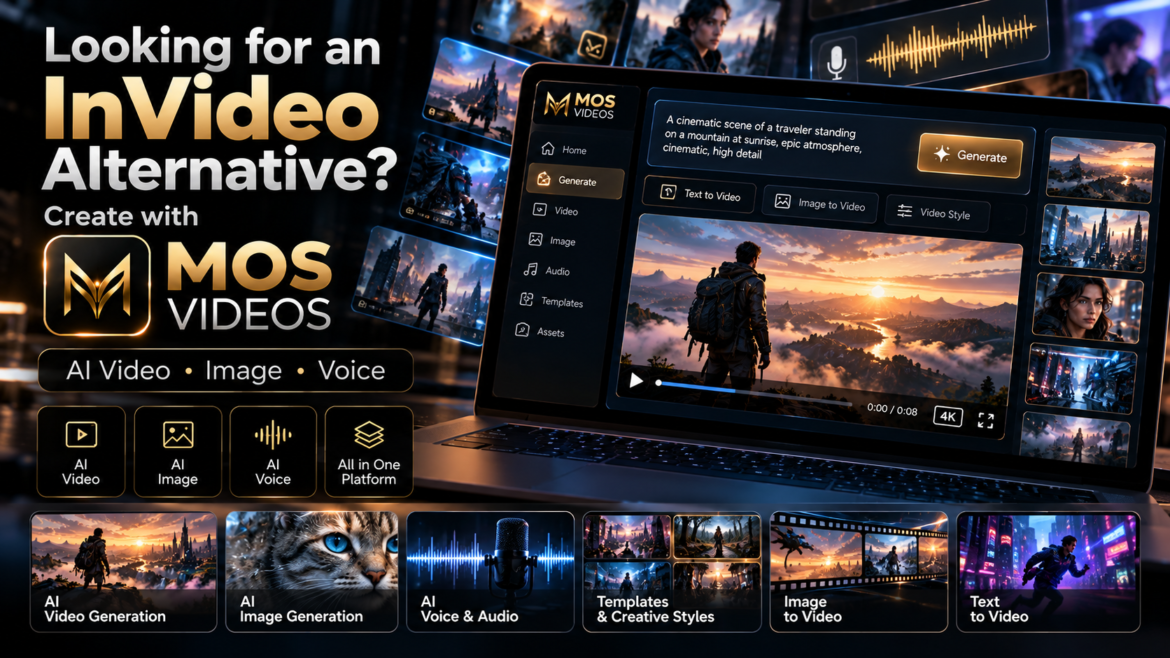
Looking for an InVideo Alternative? Discover MOS Videos for AI Video Creation

by admin outubro 8, 2026
written by admin

AI video creation has changed dramatically.

Platforms such as InVideo have helped make prompt-based video production easier to understand by showing creators that a simple idea, script, or instruction can become the foundation for a complete video workflow.

InVideo currently promotes workflows that can move from prompts and scripts into generated scenes, voiceovers, editing, and finished video production. Ajuda InVideo

For creators exploring this new way of producing content, there is another platform worth discovering:

MOS Videos.

MOS Videos is built around generative content creation across video, image, voice, audio, and multimodal AI workflows.

If you already understand the idea behind AI video platforms such as InVideo, MOS Videos gives you another way to turn creative concepts into visual content using artificial intelligence.


What Is InVideo AI?

InVideo is an AI-powered video creation platform designed to help users turn ideas, prompts, scripts, and other inputs into video content.

Its current platform combines AI generation with tasks such as:

  • Script development
  • Storyboarding
  • Video generation
  • Voiceover
  • Editing
  • Timeline-based production
  • Image, video, and audio generation

InVideo also describes its newer workflow as agent-based, where AI systems can help plan, generate, and edit content across a project. Ajuda InVideo

That makes InVideo a useful reference point for anyone trying to understand the new generation of AI video platforms.

But it is not the only way to approach generative content.


What Is MOS Videos?

MOS Videos is an AI-powered creative platform designed around generative video, image, voice, audio, and multimedia content creation.

The platform is built for users who want to move from an idea to visual content using artificial intelligence.

That can include workflows such as:

Text → Image

Text → Video

Image → Video

Script → Voice

Voice → Talking Video

Translation → Multilingual Video

Instead of thinking only about one type of media, MOS Videos focuses on a broader creative ecosystem.


MOS Videos and the New Generation of AI Video Creation

AI video platforms are becoming less about traditional manual editing and more about creative direction.

The user provides:

  • An idea
  • A prompt
  • A script
  • A reference image
  • A creative instruction

The AI helps transform that direction into visual media.

InVideo follows this broader trend by allowing creators to describe what they want and use AI to generate and edit video. invideo

MOS Videos operates within this same new generation of creative AI, but with a strong focus on connecting different media types inside broader generative workflows.


Create Videos from Text with MOS Videos

One of the most important AI video workflows is Text-to-Video.

Instead of starting with footage, the creator begins with language.

For example:

A futuristic city at night, flying vehicles between skyscrapers, cinematic camera movement, realistic reflections, dramatic neon lighting.

That prompt becomes the creative direction for the generated video.

Text-to-Video AI can support:

  • Cinematic scenes
  • Social media videos
  • Marketing content
  • Visual storytelling
  • Creative experiments
  • Product concepts
  • AI filmmaking

MOS Videos allows creators to think of text as the beginning of video production.


Turn Images into Videos

Creators can also begin with an image.

This is especially useful when the visual identity of the scene is already defined.

A typical workflow might be:

Generate an AI Image

↓

Choose the Best Visual

↓

Use Image-to-Video

↓

Add Motion

↓

Create the Final Scene

This allows creators to establish:

  • Character appearance
  • Environment
  • Lighting
  • Composition
  • Color
  • Visual style

before introducing motion.


AI Image Generation with MOS Videos

MOS Videos is not limited to video.

AI image generation can become the first stage of a larger project.

Creators can generate:

  • Characters
  • Product scenes
  • Environments
  • Marketing visuals
  • Concept art
  • Cinematic frames
  • Social content

The generated image can then become part of an AI video workflow.

This creates a simple creative path:

Prompt → Image → Video


AI Voice and Audio Creation

Modern video creation also depends heavily on sound.

MOS Videos supports broader workflows involving voice and audio, helping creators connect the visual and spoken parts of a project.

This can support:

  • Narration
  • Talking videos
  • AI presenters
  • Voice-driven content
  • Multilingual videos
  • Educational content
  • Marketing

The result is a more complete content creation workflow.


InVideo vs MOS Videos: Understanding the Difference

The goal here is not to declare one platform universally better than the other.

They can serve creators with different workflows and preferences.

InVideo currently emphasizes an agentic workflow that can write, storyboard, generate, and edit video projects while integrating multiple AI models and timeline editing. Ajuda InVideo

MOS Videos is positioned around a connected generative ecosystem where users can work across:

  • AI image generation
  • AI video generation
  • Image-to-video
  • AI voice
  • AI audio
  • Lip sync
  • Talking-head video
  • Translation
  • Multilingual creation

For creators evaluating AI video platforms, the important question is not simply:

“Which tool generates video?”

It is:

“Which workflow fits the way I want to create?”


Why Creators Look for InVideo Alternatives

Creators often explore alternatives because different platforms prioritize different workflows.

Some users may want:

  • More generative media options
  • Different creative models
  • Different interfaces
  • Image and video workflows
  • AI voice tools
  • Talking-video creation
  • Multilingual content
  • More experimentation

That is where MOS Videos becomes relevant.

It gives creators another environment for working with generative media.


MOS Videos for Content Creators

MOS Videos can support creators producing:

  • YouTube videos
  • Shorts
  • TikTok
  • Instagram Reels
  • Educational content
  • Faceless videos
  • AI storytelling
  • Technology videos
  • Cinematic experiments

A creator can combine different AI-generated assets inside one project.

For example:

Script

↓

AI Voice

↓

AI Images

↓

AI Video

↓

Final Content


MOS Videos for Social Media

Social media requires constant visual production.

Creators often need new:

  • Clips
  • Scenes
  • Backgrounds
  • Product visuals
  • Short videos
  • Creative concepts

AI generation can make this process more flexible.

Instead of relying only on pre-existing footage, creators can build visuals specifically for a post or campaign.


MOS Videos for Marketing

Marketing teams can use generative AI to explore more creative directions.

MOS Videos can fit workflows involving:

  • Product promotions
  • Campaign concepts
  • Social advertisements
  • Brand storytelling
  • Visual prototypes
  • Product scenes
  • AI-generated promotional content

A campaign can begin as a written idea and gradually become visual.


MOS Videos for AI Filmmaking

AI filmmaking is another area where generative platforms are becoming increasingly useful.

Creators can experiment with:

  • Storyboards
  • Concept scenes
  • Characters
  • Environments
  • Cinematic shots
  • Visual effects
  • Previsualization

This gives independent creators new ways to explore film-like content without beginning every concept with a physical production.


MOS Videos for Faceless Content

Faceless creators often rely on:

  • Voiceover
  • Stock footage
  • Graphics
  • Animation
  • B-roll

Generative AI expands those options.

Instead of using only generic footage, creators can generate custom scenes based on the topic of the video.

For example:

A documentary about futuristic cities could include AI-generated urban environments created specifically for the script.


Build Talking Videos with AI

MOS Videos can also be part of talking-video workflows.

A creator may begin with:

  • A portrait
  • AI-generated face
  • Avatar
  • Character

Then add:

  • Script
  • AI voice
  • Facial animation
  • Lip sync

The result is a talking digital presenter.

This can support marketing, education, social media, and faceless content.


Create Multilingual Content

Video audiences are global.

Creators may want the same content available in more than one language.

AI-powered workflows can combine:

Translation

↓

AI Voice

↓

Lip Sync

↓

Localized Video

This creates new opportunities for creators who want to reach audiences beyond their original language.


One Idea, Multiple Creative Outputs

One of the most useful ways to think about MOS Videos is not as a single-purpose generator.

Think of it as a creative chain.

An idea might become:

Text

↓

Image

↓

Video

↓

Voice

↓

Localized Version

↓

Final Content

This is where multimodal AI becomes especially powerful.


InVideo Shows What AI Video Can Become

Platforms such as InVideo have helped demonstrate that modern AI video creation can involve much more than generating a single short clip.

Its current tools emphasize workflows where AI can help with scripting, storyboards, scenes, editing, voices, and full production. Ajuda InVideo

For users already familiar with that concept, MOS Videos represents another way to explore AI-powered creative production.


Why Consider MOS Videos?

MOS Videos is designed for creators who want to experiment across several forms of generative content.

Instead of focusing only on the final video, users can work with the individual components that make the video possible.

That includes:

  • Images
  • Video
  • Voice
  • Audio
  • Characters
  • Animation
  • Translation
  • Lip sync

This gives creators more ways to develop a concept.


From Prompt to Complete Content

Imagine starting with:

A futuristic entrepreneur presenting a new technology inside a dark premium studio.

That idea could become:

AI-generated presenter

↓

AI voice

↓

Talking video

↓

Product scenes

↓

Background visuals

↓

Final promotional video

This is what connected generative creation makes possible.


MOS Videos as an AI Creative Platform

The broader value of MOS Videos is the ability to think beyond individual outputs.

You are not only generating an image.

You are creating an asset that can become video.

You are not only generating a voice.

You are creating audio that can become part of a talking presenter.

You are not only generating a video.

You are building material that can become part of a campaign, story, channel, or larger production.


Who Is MOS Videos For?

MOS Videos can be useful for:

  • Content creators
  • YouTubers
  • Social media creators
  • Marketers
  • Agencies
  • Designers
  • Filmmakers
  • Entrepreneurs
  • Educators
  • Businesses
  • AI creators

Anyone exploring generative media can use the platform as part of a modern content production workflow.


InVideo Alternative for Creators Exploring Generative AI

If you are searching for an InVideo alternative, you are probably already interested in making video creation more AI-driven.

You may want to:

  • Generate scenes from prompts
  • Create videos faster
  • Build visual concepts
  • Work with AI-generated media
  • Create social content
  • Experiment with new creative workflows

MOS Videos is designed for exactly this new generation of creators.


Why MOS Videos Is More Than an AI Video Generator

Video generation is only one part of modern generative content.

A complete digital project may require:

Video + Image + Voice + Audio + Animation + Translation

MOS Videos brings these creative possibilities into a broader ecosystem.

That makes it relevant not only for people looking for an AI video generator, but for creators building complete multimedia experiences.


Explore AI Video Creation with MOS Videos

If platforms such as InVideo introduced you to the idea of creating video through AI, MOS Videos gives you another creative direction to explore.

Start from a prompt.

Generate the image.

Create the scene.

Add the voice.

Animate the character.

Build the final video.

The goal is simple:

Turn ideas into content with fewer barriers between imagination and production.

With MOS Videos, generative AI becomes part of your creative workflow.

Key Takeaways

  • InVideo is a useful reference for understanding modern prompt-driven AI video creation and currently combines generation, scripting, voice, editing, and AI-assisted workflows. Ajuda InVideo
  • MOS Videos offers a generative workflow centered on video, image, voice, audio, and multimodal content creation.
  • Creators can use MOS Videos for Text-to-Video and Image-to-Video workflows.
  • AI images can become source material for generated videos.
  • Voice, lip sync, talking avatars, and translation can become part of broader video workflows.
  • MOS Videos is positioned as an option for creators looking beyond a single AI video-generation function.

Frequently Asked Questions

What is InVideo AI?

InVideo is an AI-powered video creation platform that can help users move from prompts or scripts into scenes, voiceovers, editing, and finished video workflows. Its current platform also uses AI agents and multiple generation models. Ajuda InVideo

Is MOS Videos an InVideo alternative?

MOS Videos can be considered an alternative for creators exploring AI-powered video and multimedia generation. Its focus includes AI video, images, voice, audio, talking content, and broader multimodal creative workflows.

Can MOS Videos create videos from text?

MOS Videos supports Text-to-Video-oriented workflows where written prompts can become the creative foundation for generated video content.

Can MOS Videos turn images into videos?

Image-to-Video workflows allow creators to use an existing or AI-generated image as the visual starting point for video creation.

Can MOS Videos generate AI images?

Yes. AI image creation is part of the broader MOS Videos generative content workflow.

Is MOS Videos only for video generation?

No. MOS Videos is positioned around a broader creative ecosystem involving video, images, voice, audio, translation, lip sync, and other AI-powered content workflows.

Who should use MOS Videos?

MOS Videos can support creators, marketers, businesses, filmmakers, designers, agencies, educators, and users interested in AI-powered content creation.

Why consider MOS Videos if I already know InVideo?

If you already understand the prompt-driven workflow popularized by tools such as InVideo, MOS Videos gives you another environment for exploring AI video, images, voice, audio, and connected generative-media workflows.

outubro 8, 2026 0 comments
0 FacebookTwitterPinterestEmail
IAAI VideoImagemVídeo

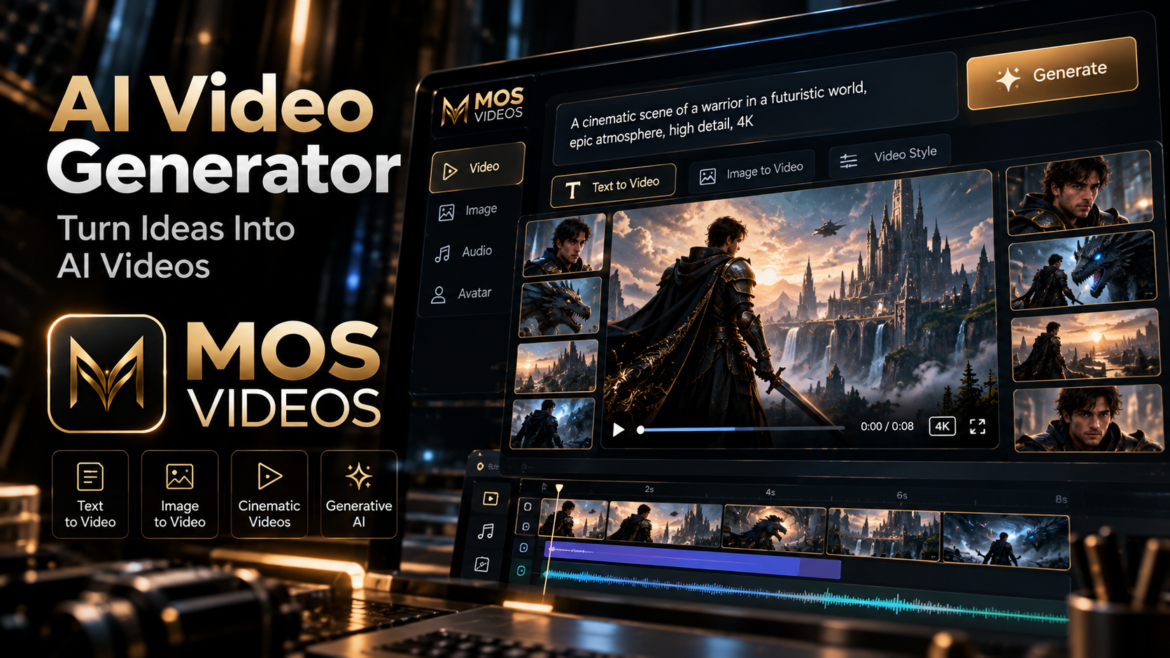
AI Video Generator: Create Videos with AI Using MOS Videos

by admin outubro 6, 2026
written by admin

Video creation is no longer limited to cameras, complex production setups, or traditional editing workflows.

With an AI Video Generator, creators can turn ideas, prompts, and images into moving visual content using artificial intelligence.

A simple description can become a cinematic scene.

A static image can become an animated video.

A creative concept can become social content, marketing material, storytelling, or visual experimentation.

With MOS Videos, AI video generation becomes part of a broader creative workflow designed for modern creators.

Instead of starting with technical complexity, you can start with the most important part:

the idea.

Describe it.

Visualize it.

Generate it.


What Is an AI Video Generator?

An AI Video Generator is a tool that uses artificial intelligence to create video content from inputs such as text prompts, images, or other visual references.

Instead of recording every scene manually, users can describe what they want to create.

For example:

A futuristic sports car driving through a neon city at night, cinematic tracking shot, realistic reflections, dramatic lighting.

The AI interprets the prompt and generates moving visual content based on that creative direction.

This gives creators a new way to produce video.


Create Videos from Text with AI

One of the most powerful AI video workflows is Text-to-Video AI.

The user describes the scene using natural language.

For example:

A spacecraft flying above an alien planet during sunrise, cinematic wide shot, realistic clouds, dramatic atmosphere.

The AI uses that description as the creative foundation for the generated video.

Text-to-video generation can be useful when you want to create something that does not yet exist visually.

This could include:

  • Futuristic cities
  • Fantasy worlds
  • Product concepts
  • Cinematic environments
  • Fictional characters
  • Abstract visual scenes
  • Marketing concepts

The prompt becomes the starting point for production.


Turn Images into Videos with AI

Another powerful workflow is Image-to-Video AI.

Instead of starting only with text, users begin with an image.

The image establishes:

  • Character appearance
  • Composition
  • Environment
  • Lighting
  • Visual style
  • Color direction

The AI can then introduce movement.

For example:

A still image of a futuristic city can become a cinematic sequence with moving lights, atmospheric fog, traffic, and camera motion.

This creates a workflow like:

AI Image

↓

Image-to-Video

↓

AI Video

This approach can offer more visual control because the creator already defines the starting frame.


AI Video Generator for Content Creators

Creators constantly need new visual content.

AI video generation can support:

  • YouTube
  • TikTok
  • Instagram Reels
  • YouTube Shorts
  • Social media campaigns
  • Faceless content
  • Storytelling
  • Educational content
  • Creative experiments

Instead of relying only on stock footage or existing clips, creators can generate scenes specifically for their ideas.

That can make content feel more original and visually distinctive.


AI Video Generator for YouTube

YouTube creators can integrate AI-generated video into many formats.

Examples include:

  • Documentary-style videos
  • Educational channels
  • AI storytelling
  • Technology videos
  • Faceless channels
  • Tutorials
  • Cinematic videos
  • Concept videos

AI-generated scenes can be combined with:

  • Narration
  • Music
  • B-roll
  • Graphics
  • Subtitles
  • Traditional footage

The result does not have to be completely AI-generated.

AI can simply become another creative tool inside the production process.


AI Video Generator for Social Media

Short-form content depends heavily on visual impact.

AI-generated video can help creators build scenes designed specifically for:

  • TikTok
  • Instagram
  • Reels
  • Shorts
  • Promotional clips
  • Viral concepts

A creator can test several visual directions before choosing the final result.

This makes generative video particularly useful for experimentation.


AI Video Generator for Marketing

Marketing teams often need multiple creative concepts.

Instead of producing every idea physically, AI video generation can help visualize campaigns before larger production begins.

Potential use cases include:

  • Product advertising
  • Brand storytelling
  • Promotional videos
  • Social campaigns
  • Product demonstrations
  • Creative concepts
  • Digital advertisements

A simple idea can become a visual prototype much faster.


Generate Cinematic AI Videos

AI video generation is especially useful for creators who want cinematic visual styles.

Prompts can describe:

  • Camera movement
  • Lens style
  • Lighting
  • Environment
  • Mood
  • Action
  • Composition

For example:

Slow cinematic tracking shot following a woman through a futuristic city, rain falling, neon reflections, dramatic lighting, realistic movement.

The more clearly the prompt describes the visual intent, the easier it becomes to guide the creative direction.


How to Write Better AI Video Prompts

A useful AI video prompt structure is:

Subject + Action + Environment + Camera + Lighting + Style

For example:

A black sports car accelerating through a futuristic city at night, low-angle tracking shot, wet streets reflecting neon signs, cinematic lighting, photorealistic style.

This tells the AI:

  • What the subject is
  • What it is doing
  • Where it is
  • How the camera moves
  • What the lighting looks like
  • What visual style is desired

Good prompting is one of the most important skills in AI video creation.


Text-to-Video vs Image-to-Video

Both workflows can generate AI video, but they solve different creative problems.

Text-to-VideoImage-to-Video
Starts with textStarts with an image
AI creates the initial sceneCreator defines the initial frame
Useful for ideas from scratchUseful for visual consistency
High creative freedomStronger visual reference
Prompt controls appearance and motionImage controls appearance, prompt controls motion

Creators can use both inside the same project.


Create AI Images Before Creating Video

One effective workflow is to create the visual concept first.

For example:

Text Prompt

↓

AI Image Generator

↓

Choose Best Image

↓

Image-to-Video

↓

Final Video

This allows creators to decide exactly how the scene should look before introducing movement.

It can be especially useful for:

  • Characters
  • Product scenes
  • Cinematic environments
  • Storytelling
  • Branded visuals

AI Video Generator for Storytelling

Generative video opens interesting possibilities for storytelling.

Creators can generate:

  • Establishing shots
  • Characters
  • Environments
  • Fantasy scenes
  • Science-fiction scenes
  • Dramatic transitions
  • Visual sequences

A written story can gradually become visual.

For example:

Story Idea

→ Character

→ Scene

→ AI Video

→ Narration

→ Final Story

This gives independent creators access to new forms of visual experimentation.


AI Video Generator for Product Content

Businesses can also use AI-generated video to explore product presentation.

Possible applications include:

  • Product concepts
  • Advertising
  • Promotional visuals
  • Lifestyle scenes
  • Campaign ideas
  • Social content

A product can be placed inside environments that would otherwise require larger production setups.

This can help teams experiment with different creative directions.


AI Video Generator for AI Filmmaking

AI filmmaking combines generative tools with traditional filmmaking skills.

AI can support:

  • Concept art
  • Previsualization
  • Storyboarding
  • Scene generation
  • Visual effects
  • Experimental shots
  • Environment creation

The filmmaker still controls the creative vision.

AI simply expands the range of available tools.


Why Creators Are Using AI Video Generation

AI video generation provides several advantages.

Faster Experimentation

Creators can explore multiple visual ideas quickly.

More Creative Freedom

Scenes do not always need to exist physically.

Flexible Production

Images, text, and video can become connected.

Visual Prototyping

Ideas can be tested before larger production begins.

New Storytelling Possibilities

Creators can visualize concepts that would otherwise be difficult to produce.


AI Video Generation and Multimodal Content

Modern generative content increasingly combines multiple media formats.

A project might involve:

Text

↓

AI Image

↓

AI Video

↓

AI Voice

↓

Audio

↓

Final Content

This is known as a multimodal creative workflow.

Instead of using AI for only one task, creators combine several technologies into one production process.


Create AI Videos with MOS Videos

MOS Videos is designed for creators who want to work across generative media.

AI video generation can become part of a larger workflow involving:

  • AI images
  • AI video
  • Image-to-video
  • Voice
  • Audio
  • Lip sync
  • Talking videos
  • Multilingual content

This allows creators to move between different forms of content while keeping the creative process connected.


From Idea to AI Video with MOS Videos

A project can begin with a simple concept.

For example:

A futuristic explorer walking through an abandoned city.

From there:

Write the Prompt

↓

Generate the Visual

↓

Create the Video

↓

Add Voice or Audio

↓

Build the Final Content

The entire process begins with an idea rather than complicated production infrastructure.


Why Use MOS Videos for AI Video Creation?

MOS Videos focuses on a broader creative workflow rather than treating video generation as an isolated feature.

Creators can explore different types of generative media within the same ecosystem.

This is useful because modern content rarely consists of only one asset.

A complete project may require:

  • Images
  • Video
  • Voice
  • Audio
  • Characters
  • Visual effects
  • Localization

MOS Videos helps connect these creative stages.


AI Video Generator for Modern Creators

The role of creators is changing.

Instead of manually producing every visual element, creators increasingly direct AI systems through ideas, prompts, references, and creative decisions.

This does not remove creativity.

It changes where creativity happens.

The creator becomes responsible for:

  • The idea
  • The visual direction
  • The story
  • The prompt
  • The selection
  • The editing
  • The final presentation

AI becomes part of the production toolkit.


Create More Than a Single AI Video

One generation can become the beginning of a larger project.

A video can become:

  • A social post
  • Part of a YouTube video
  • A campaign asset
  • A storytelling sequence
  • A product presentation
  • A cinematic project

The key is thinking beyond individual generations.

AI video becomes most powerful when it connects with a complete content strategy.

MOS Videos: AI Video Creation in a Bigger Creative Ecosystem

MOS Videos brings AI video creation together with other forms of generative content.

Start with text.

Generate an image.

Transform it into motion.

Add voice.

Create audio.

Develop the final story.

This is what makes multimodal AI workflows especially useful for modern creators.

Create the idea.

Generate the scene.

Turn it into video.

Build with MOS Videos.

Key Takeaways

  • An AI Video Generator creates video content using artificial intelligence.
  • Text-to-video allows creators to generate scenes from written prompts.
  • Image-to-video transforms static images into moving visual content.
  • AI video can support social media, marketing, YouTube, filmmaking, and storytelling.
  • Prompt quality plays an important role in guiding AI-generated video.
  • MOS Videos connects AI video generation with image, voice, audio, and other creative workflows.

Frequently Asked Questions

What is an AI Video Generator?

An AI Video Generator is a tool that uses artificial intelligence to create video content from text prompts, images, visual references, or other creative inputs.

Can AI generate videos from text?

Yes. Text-to-video AI allows users to describe a scene using natural language and generate moving visual content based on that description.

Can AI turn an image into a video?

Yes. Image-to-video AI can animate static images by creating movement, additional frames, camera motion, and environmental effects.

What can I create with an AI Video Generator?

AI video generators can support social media content, advertising, storytelling, product concepts, cinematic scenes, educational videos, YouTube content, and creative experimentation.

How do I write a good AI video prompt?

A strong prompt usually describes the subject, action, environment, camera movement, lighting, mood, and visual style.

Can AI video generation be used for marketing?

Yes. Marketing teams can use AI-generated video for campaign concepts, promotional content, advertising, social media, and visual prototyping.

Can AI images become AI videos?

Yes. AI-generated images can be used as source frames for image-to-video generation, creating a connected workflow between image and video creation.

What is MOS Videos?

MOS Videos is an AI-powered creative platform built around generative workflows involving video, image, voice, audio, and other multimedia content creation.

outubro 6, 2026 0 comments
0 FacebookTwitterPinterestEmail
VídeoAI VideoIAImagem

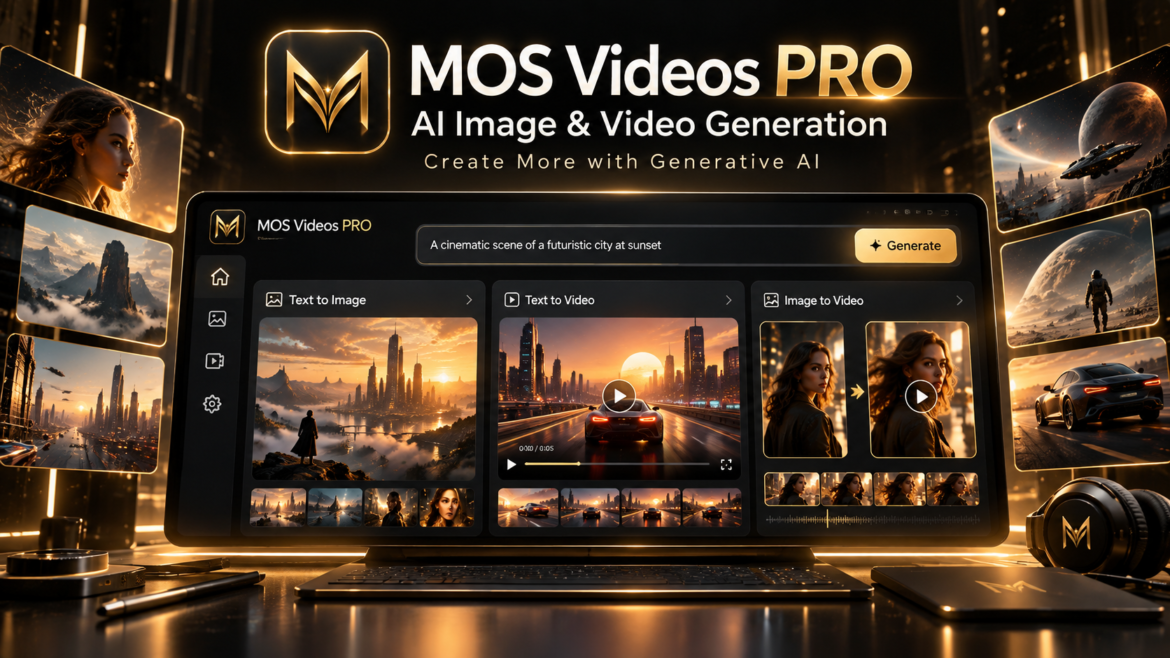
MOS Videos PRO: Generate AI Images and Videos in One Platform

by admin outubro 5, 2026
written by admin

AI content creation is becoming faster, more visual, and more accessible.

With MOS Videos PRO, creators can generate both AI images and AI videos inside the same creative platform.

Instead of switching between different tools for every stage of the process, users can move from an idea to an image and from an image to video within a connected AI-powered workflow.

Whether the goal is to create social media content, marketing visuals, cinematic concepts, digital characters, product scenes, or creative experiments, MOS Videos PRO is designed to make generative content creation simpler and more flexible.

Write the idea. Generate the visual. Turn it into motion.

That is the core of the MOS Videos creative experience.


What Can You Create with MOS Videos PRO?

MOS Videos PRO brings image and video generation together for creators who want to transform ideas into visual content with artificial intelligence.

Users can explore workflows such as:

  • Text-to-image generation
  • AI image creation
  • Text-to-video generation
  • Image-to-video generation
  • AI video creation
  • Visual concept development
  • Cinematic AI content
  • Social media content
  • Marketing creatives
  • Digital storytelling

The goal is to give creators more freedom to move between different media formats without interrupting the creative process.


Generate AI Images from Text

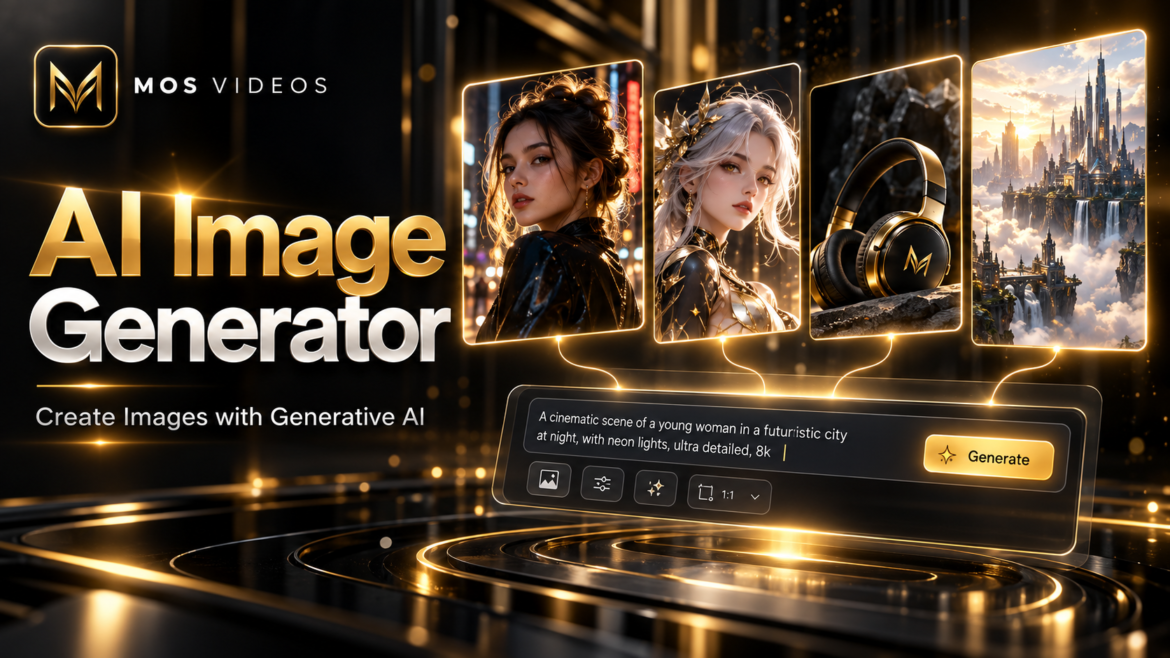
One of the main capabilities of MOS Videos PRO is AI image generation.

Creators can describe what they want to see using natural language.

For example:

A futuristic city at night, cinematic lighting, wet streets, realistic reflections, premium science-fiction atmosphere.

The AI interprets the prompt and generates visual content based on the requested concept.

This allows users to explore ideas without beginning from a blank canvas.

AI image generation can be used for:

  • Concept art
  • Social media visuals
  • Marketing content
  • Product concepts
  • Characters
  • Backgrounds
  • Storyboards
  • Cinematic frames
  • Advertising ideas
  • Creative experimentation

A simple prompt can become the starting point for an entire visual project.


Turn Ideas into AI Videos

MOS Videos PRO also supports AI video generation, allowing creators to transform concepts into moving visual content.

Instead of thinking only in static images, users can explore motion, atmosphere, camera movement, and storytelling.

AI video generation can support content such as:

  • Short cinematic scenes
  • Social media videos
  • Product visuals
  • Creative campaigns
  • Storytelling sequences
  • Experimental video
  • AI filmmaking
  • Promotional content

The experience is designed around one simple idea:

Describe what you want to create and let AI help turn that concept into motion.


Create Videos from Images

AI image generation becomes even more useful when combined with Image-to-Video AI.

A creator can first generate the visual style they want.

Then that image can become the foundation for a video.

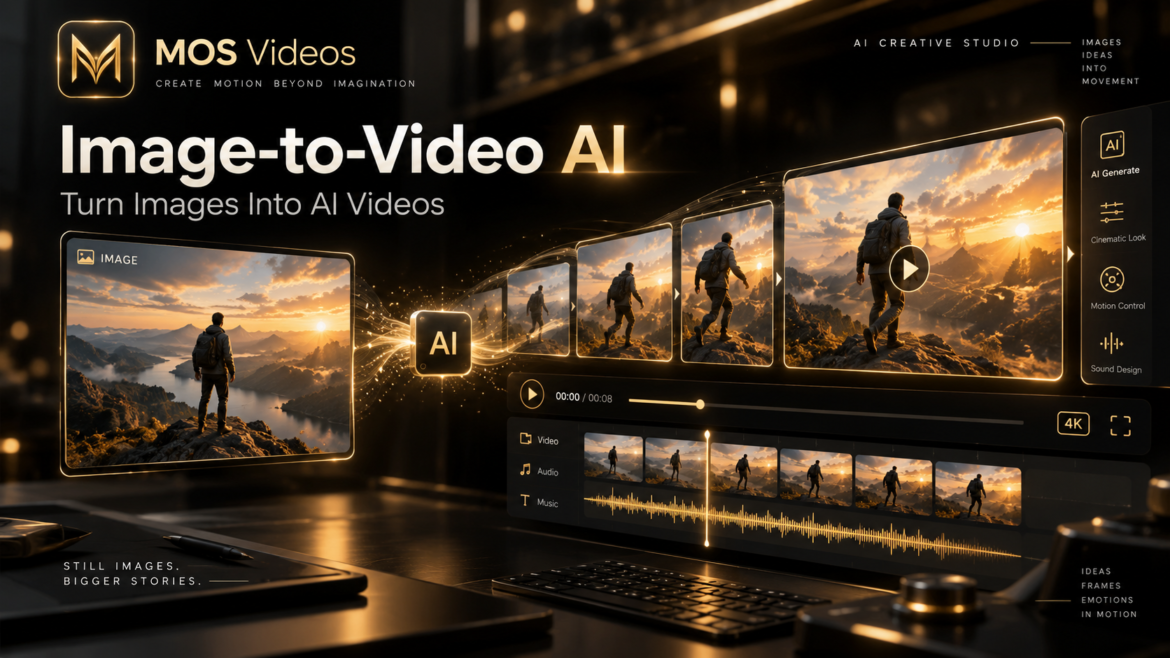
The workflow looks like this:

Prompt

↓

AI Image

↓

Image-to-Video

↓

AI Video

This gives creators more control over the initial composition before movement is introduced.

For example, a user can generate:

  • A character
  • A landscape
  • A product scene
  • A cinematic environment
  • A futuristic city

and then transform that visual into animated content.


One Creative Workflow for Images and Video

One of the main advantages of MOS Videos PRO is the connection between different creative stages.

Instead of treating AI images and AI videos as completely separate tasks, creators can use them as parts of the same process.

For example:

Idea

→ Prompt

→ AI Image

→ AI Video

→ Final Content

This makes MOS Videos useful for creators who want to move quickly from visual concept to finished media.


AI Image Generation for Content Creators

Creators constantly need new visual material.

MOS Videos PRO can support content production for:

  • YouTube
  • Instagram
  • TikTok
  • Shorts
  • Reels
  • Blogs
  • Digital campaigns
  • Creative projects

An AI-generated image can become:

  • A thumbnail concept
  • A video frame
  • A social post
  • A character
  • A background
  • A promotional visual

And that same image can later become part of an AI-generated video.


AI Video Generation for Social Media

Short-form content depends heavily on strong visuals.

AI video generation can help creators explore new concepts for:

  • Instagram Reels
  • TikTok
  • YouTube Shorts
  • Promotional videos
  • Storytelling clips
  • Visual campaigns

Instead of relying only on existing footage, creators can generate scenes designed specifically for the content they want to publish.

This opens more creative possibilities for brands, influencers, marketers, and independent creators.


AI Generation for Marketing

Marketing teams often need multiple visual ideas before choosing the final direction.

MOS Videos PRO can support that process by helping teams generate:

  • Campaign concepts
  • Advertising visuals
  • Product scenes
  • Promotional videos
  • Brand storytelling
  • Social media creatives

Generative AI allows teams to experiment with different visual directions faster.

A concept can be tested as an image.

That image can then become a video.

The workflow becomes more flexible from the earliest stage of production.


AI Generation for Storytelling

AI image and video generation can also support visual storytelling.

Creators can generate:

  • Characters
  • Environments
  • Scenes
  • Cinematic moments
  • Fantasy worlds
  • Science-fiction concepts

A story that begins as text can gradually become visual.

For example:

Story Idea

↓

Character Image

↓

Environment Image

↓

Image-to-Video

↓

Cinematic Sequence

This allows creators to develop visual narratives using generative AI.


AI Generation for Digital Creators

MOS Videos PRO is designed for creators who want flexibility.

That may include:

  • Video creators
  • Designers
  • Marketers
  • Social media creators
  • Filmmakers
  • Agencies
  • Entrepreneurs
  • Digital artists
  • Content teams

The platform can support both fast experimentation and larger creative workflows.


From Prompt to Visual Content

Generative AI changes the relationship between ideas and production.

Instead of manually creating every visual element, users can communicate their creative direction through prompts.

A strong prompt can describe:

  • Subject
  • Environment
  • Lighting
  • Camera angle
  • Mood
  • Style
  • Movement
  • Composition

The AI then uses these instructions to help create the visual result.

This makes prompt writing an important part of modern AI creation.


Text-to-Image with MOS Videos

Text-to-image generation gives creators a simple starting point.

Describe the scene.

Define the style.

Generate the image.

For example:

A luxury sports car inside a futuristic showroom, dramatic lighting, premium advertising photography, realistic reflections.

The concept can quickly become a visual asset ready for further development.


Text-to-Video with MOS Videos

Text-to-video expands this process into motion.

Creators can describe scenes such as:

A futuristic motorcycle moving through a neon city at night, cinematic tracking shot, realistic motion, dramatic lighting.

The goal is to transform written creative direction into moving visual content.

This creates new possibilities for creators who want to generate video concepts directly from ideas.


Image-to-Video with MOS Videos

Creators can also begin with an image.

This is useful when the visual identity is already established.

For example:

  1. Generate the character.
  2. Select the best image.
  3. Turn the image into video.
  4. Add movement.
  5. Develop the final scene.

This workflow connects image generation directly with AI video creation.


Why Combine AI Images and AI Videos?

Images and videos are closely connected in digital content.

Images can define:

  • Character design
  • Lighting
  • Environment
  • Composition
  • Brand style

Video adds:

  • Movement
  • Camera direction
  • Timing
  • Atmosphere
  • Storytelling

Combining both gives creators more control over the creative process.

Instead of asking whether they should generate an image or a video, creators can use both.


MOS Videos PRO for Modern AI Creation

MOS Videos PRO is designed for creators who want more than isolated AI tools.

The platform supports a broader generative workflow.

Creators can move between:

Image Generation

Video Generation

Image-to-Video

Generative Content Creation

The result is a more connected creative environment.


Create Without Breaking Your Creative Flow

Creative ideas move quickly.

Opening different platforms, exporting assets, and rebuilding the same concept across multiple tools can interrupt that process.

MOS Videos is designed to keep generative creation more connected.

Start with the idea.

Develop the image.

Transform it into video.

Continue building the project.

The technology stays in the background while the creative direction remains in the hands of the user.


A Platform Built for Generative Visual Content

Generative AI is no longer limited to producing individual images.

Creators increasingly want to move between multiple formats.

A visual concept can begin as text.

Become an image.

Turn into video.

Become part of a larger campaign or story.

MOS Videos PRO is built around this type of workflow.


Why Use MOS Videos PRO?

Creators need tools that support the way modern content is produced.

MOS Videos PRO brings together AI-powered image and video creation within one platform.

This helps users:

  • Explore visual ideas
  • Create AI images
  • Generate AI videos
  • Transform images into motion
  • Develop cinematic concepts
  • Produce content for social media
  • Create promotional media
  • Build visual stories

The focus is simple:

Give creators more ways to turn ideas into visual content with AI.


Create More with MOS Videos

A single prompt can become the beginning of something much larger.

An image can become a scene.

A scene can become a video.

A video can become part of a campaign, story, social post, or creative project.

With MOS Videos PRO, creators can explore these possibilities within one AI-powered creative environment.

Imagine the scene.

Generate the image.

Create the video.

Build with MOS Videos.

Key Takeaways

  • MOS Videos PRO supports AI-powered image and video generation.
  • Users can create images from text prompts.
  • Generated images can become the starting point for AI video creation.
  • Text-to-video and image-to-video workflows allow creators to explore different types of visual content.
  • MOS Videos is designed for social media, marketing, storytelling, filmmaking, and digital content creation.
  • The platform brings image and video generation together inside a connected generative workflow.

Frequently Asked Questions

What is MOS Videos PRO?

MOS Videos PRO is designed for AI-powered creative workflows involving image and video generation, allowing users to transform prompts and visual concepts into generative content.

Can MOS Videos generate AI images?

Yes. MOS Videos supports AI image generation workflows that allow users to create visual content from text-based creative instructions.

Can MOS Videos generate AI videos?

MOS Videos supports AI video generation, allowing creators to transform ideas and visual concepts into moving content.

Can I turn an AI-generated image into a video?

Image-to-video workflows allow generated images to become the starting point for moving visual content, helping creators maintain greater control over the initial appearance of a scene.

Who can use MOS Videos PRO?

MOS Videos PRO can support content creators, marketers, filmmakers, designers, businesses, agencies, social media creators, and other users interested in generative visual content.

Can MOS Videos be used for social media content?

Yes. AI-generated images and video can support workflows for Reels, Shorts, TikTok, YouTube, promotional content, and other digital platforms.

What is the advantage of generating images and videos in the same platform?

Connecting image and video generation allows creators to move from concept to visual design and then into motion without treating each stage as a completely separate creative process.

What can I create with MOS Videos?

MOS Videos can support visual workflows involving AI images, AI videos, image-to-video creation, cinematic scenes, social content, marketing visuals, digital storytelling, and other generative media projects.

outubro 5, 2026 0 comments
0 FacebookTwitterPinterestEmail
AI VideoIA

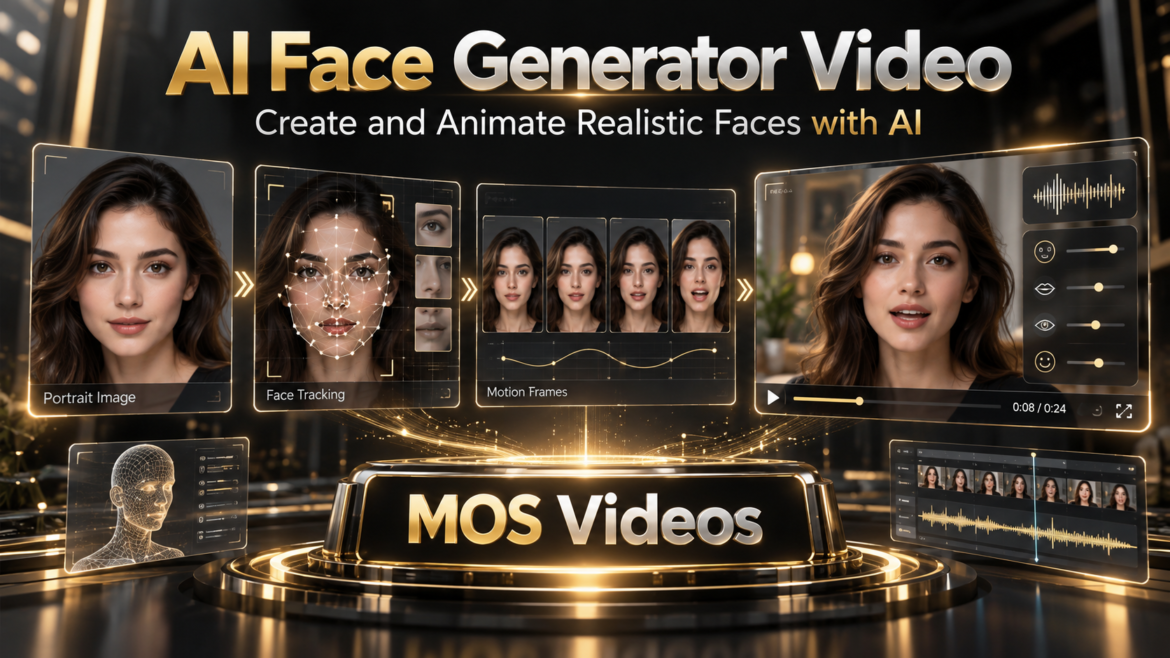
AI Face Generator Video: Create and Animate Faces with Artificial Intelligence

by admin outubro 2, 2026
written by admin

Artificial intelligence is making it possible to create faces that never existed and transform them into moving digital characters.

An AI Face Generator Video workflow can generate a face, animate it, add speech, synchronize the mouth, and turn the result into video content.

This opens new possibilities for:

  • AI avatars
  • Virtual presenters
  • Talking characters
  • Social media
  • Marketing
  • Educational content
  • Storytelling
  • AI filmmaking
  • Digital creators

Instead of starting with a filmed person, creators can begin with a generated visual identity.

That face can then become part of a larger AI-powered video workflow.

Platforms such as MOS Videos fit naturally into this process by combining image generation, video creation, voice, audio, and other generative tools.

A face can begin as an image.

Then it can move.

Then it can speak.

Then it can become part of a complete video.


What Is an AI Face Generator Video?

An AI Face Generator Video is a generative AI workflow used to create or animate artificial faces for video content.

The process may begin with:

  • A text prompt
  • An AI-generated portrait
  • A reference image
  • A digital avatar
  • A character concept

The generated face can then be transformed into moving content using technologies such as:

  • Image-to-video AI
  • Facial animation
  • Lip sync
  • AI voice generation
  • Talking avatar technology
  • Video generation

The result can be a digital character that appears to move, react, or speak.


How Does an AI Face Generator Work?

An AI face generator uses generative artificial intelligence to create a visual representation of a human-like face based on user instructions.

A creator might write:

A professional futuristic presenter, realistic facial features, clean studio lighting, confident expression, cinematic portrait photography.

The AI interprets those instructions and generates a face based on the requested attributes.

These attributes can include:

  • Age range
  • Hair
  • Clothing
  • Expression
  • Lighting
  • Visual style
  • Camera angle
  • Environment
  • Character identity

Once the face is generated, it can become the foundation for video.


How Does AI Face Video Generation Work?

Face generation and video generation can be combined into one workflow.

A simplified process looks like this:

Text Prompt

↓

AI Face Generation

↓

Character Selection

↓

Facial Animation

↓

AI Voice

↓

Lip Sync

↓

AI Video

The creator first establishes the appearance of the character.

Then artificial intelligence adds movement.

Finally, voice and facial synchronization can transform the generated face into a talking video.


AI Face Generator vs AI Face Animation

These two concepts are related but different.

An AI Face Generator creates the appearance of the face.

AI Face Animation makes that face move.

For example:

Face Generator:
Creates a fictional digital presenter.

Face Animation:
Makes the presenter blink, move, react, or speak.

When both technologies work together, a static AI portrait can become a digital character.


How to Generate an AI Face for Video

A strong AI face usually begins with a clear creative direction.

1. Define the Character

Decide what type of person or character you want to create.

For example:

  • Professional presenter
  • Futuristic influencer
  • Educational host
  • Business spokesperson
  • Fantasy character
  • Digital creator

The clearer the concept, the easier it is to build a consistent visual identity.


2. Describe the Face

The prompt can include details such as:

  • Hair
  • Facial expression
  • Clothing
  • Lighting
  • Camera framing
  • Background
  • Visual style

For example:

A realistic male technology presenter, dark hair, professional black jacket, confident expression, modern studio background, soft cinematic lighting, photorealistic portrait.

This gives the model a more specific direction.


3. Choose a Strong Portrait

Once several faces are generated, choose one with:

  • Clear facial features
  • Good lighting
  • Natural proportions
  • Visible mouth
  • Consistent eyes
  • Clean composition

A clear portrait can work better as a foundation for animation.


AI Face Generator for Talking Videos

One of the most useful applications is creating a talking face.

The workflow can be:

AI Face

↓

Script

↓

AI Voice

↓

Facial Animation

↓

Lip Sync

↓

Talking Video

The result is a digital character that appears to deliver the script.

This can be useful for creators who want a presenter without recording themselves on camera.


How to Make an AI Face Talk

A generated face can be turned into a speaking character by combining voice and facial animation.

The process usually involves:

  1. Generate or upload the face.
  2. Write the script.
  3. Generate or add the voice.
  4. Detect facial features.
  5. Animate the face.
  6. Synchronize the lips.
  7. Render the final video.

The speech determines how the mouth and facial features should move.


AI Face Generator + Talking Head AI

AI face generation and Talking Head AI are closely connected.

The face generator creates the character.

Talking Head AI turns that character into a presenter.

For example:

AI Face Generator

→ Digital Character

→ Talking Head AI

→ Video Presenter

This combination can be especially valuable for:

  • Tutorials
  • Marketing
  • Educational content
  • Social media
  • Faceless channels
  • Digital brands

AI Face Generator + Lip Sync

Lip sync is what connects the generated face to speech.

Without lip synchronization, a talking face can feel disconnected from the audio.

A complete workflow may look like:

Generated Face

↓

AI Voice

↓

Lip Sync

↓

Talking Character

Lip sync helps make the mouth movement correspond more closely with the generated or recorded voice.


AI Face Generator + AI Voice

AI voice generation gives the character a speaking identity.

A creator can define:

  • Voice style
  • Pacing
  • Tone
  • Energy
  • Delivery

The generated face and voice should complement each other.

For example, a professional business avatar may work better with a clear and confident voice, while a social-media character may benefit from a more energetic style.


AI Face Generator for Virtual Presenters

Virtual presenters are one of the strongest use cases for AI-generated faces.

A creator or company can build a recognizable digital host.

That presenter can appear across:

  • Product videos
  • Training
  • Tutorials
  • Ads
  • Social media
  • Educational content
  • Brand communication

The same visual identity can potentially be reused across multiple videos.


AI Face Generator for Social Media

AI-generated faces can be used as recurring digital characters.

This can be useful for:

  • Instagram Reels
  • YouTube Shorts
  • TikTok
  • Storytelling
  • AI influencer concepts
  • Educational clips
  • Marketing content

A consistent AI character can become part of a recognizable content identity.


AI Face Generator for YouTube

YouTube creators can also use generated faces as presenters.

This may work especially well for:

  • Faceless channels
  • Technology content
  • Educational channels
  • Tutorials
  • Storytelling
  • News-style content
  • AI experiments

Instead of appearing personally in every video, the creator can build a digital host.


AI Face Generator for Marketing

Marketing teams can create AI-generated presenters for different campaigns.

Potential applications include:

  • Product explainers
  • Social advertisements
  • Landing-page videos
  • Brand campaigns
  • Tutorials
  • Customer education
  • Promotional content

An AI-generated character can give the campaign a distinct visual identity.


AI Face Generator for Businesses

Businesses can use digital faces in internal and external communication.

Possible use cases include:

  • Onboarding
  • Training
  • Product demonstrations
  • Corporate videos
  • Sales presentations
  • Help content
  • Customer communication

A virtual presenter can be reused while the script changes.


AI Face Generator for Storytelling

Not every AI face needs to be a corporate presenter.

Generated characters can also become part of fictional stories.

Creators can build:

  • Fantasy characters
  • Science-fiction characters
  • Historical-inspired figures
  • Fictional influencers
  • Digital storytellers
  • AI film characters

These characters can then be animated using AI video generation.


From AI Face to AI Character

A face is only the beginning.

A generated character can evolve through multiple stages.

For example:

Face

↓

Expression

↓

Voice

↓

Movement

↓

Personality

↓

Video

This turns a static portrait into a more complete digital character.


AI Face Generator and Image-to-Video AI

Image-to-Video AI is one of the most important technologies for animating generated faces.

The workflow is straightforward:

Generate AI Face

↓

Use Image-to-Video

↓

Add Motion

↓

Create Video

Motion can include:

  • Head movement
  • Eye movement
  • Facial expressions
  • Camera movement
  • Environmental animation

This makes an AI-generated portrait feel more dynamic.


AI Face Generator and Video Lip Sync

For speaking characters, Image-to-Video alone may not be enough.

Speech needs synchronization.

That is where Video Lip Sync AI becomes relevant.

The workflow becomes:

AI Face

↓

Image-to-Video

↓

AI Voice

↓

Video Lip Sync

↓

Talking Character

This combines several generative technologies into one production.


AI Face Generator for Multilingual Videos

A generated character can potentially appear in multiple language versions.

For example:

Same AI Presenter

→ English

→ Portuguese

→ Spanish

→ French

The visual identity stays consistent while the voice and lip movement adapt.

This can help creators build multilingual content around one digital presenter.


AI Face Generator + AI Voice Translation

Translation expands the possibilities even further.

A creator can:

  1. Generate a character.
  2. Create the original script.
  3. Generate the voice.
  4. Translate the script.
  5. Generate voices in other languages.
  6. Apply lip synchronization.

The same character can then communicate with different audiences.


AI Faces and Digital Humans

The concept of a digital human goes beyond a static face.

A digital human may include:

  • Visual identity
  • Voice
  • Facial expressions
  • Body movement
  • Personality
  • Interactive behavior

AI-generated faces can become the visual foundation for these virtual characters.

As AI video technology improves, the distinction between static AI portraits and animated digital humans continues to shrink.


How to Make AI Faces Look More Realistic

Several factors influence realism.

Use Clear Prompts

Specify the intended look rather than using vague descriptions.

Keep Facial Features Consistent

Avoid contradictory details.

Use Natural Lighting

Lighting can dramatically influence realism.

Choose Appropriate Expressions

Subtle facial expressions can feel more believable.

Use Clean Source Images

If the face will be animated, facial features should be clearly visible.

Keep Motion Natural

Small movements often look more convincing than exaggerated animation.


Challenges of AI Face Generation

AI-generated faces can still have imperfections.

Possible issues include:

  • Inconsistent facial features
  • Strange expressions
  • Unnatural eyes
  • Skin artifacts
  • Character changes
  • Poor facial motion
  • Lip sync errors

Creators should review generated content before publishing.

Consistency becomes particularly important when the same character appears in several scenes.


Character Consistency in AI Video

Maintaining the same face across multiple video clips can be challenging.

The character may change slightly between generations.

Creators can improve consistency by using:

  • Strong reference images
  • Consistent prompts
  • Similar lighting
  • Similar camera angles
  • Controlled wardrobe
  • Clear character descriptions

Character consistency is especially important when building a recurring digital presenter.


AI Face Generator and MOS Videos

MOS Videos fits naturally into this type of workflow because AI face creation does not need to stop at the image stage.

A complete creative process can involve:

AI Image Generation

↓

Face Creation

↓

Image-to-Video

↓

AI Voice

↓

Lip Sync

↓

Audio

↓

Final Video

This connects several types of generative media inside one larger creative idea.


Build Digital Characters with MOS Videos

Imagine creating a virtual host for your content.

You first define the character.

Then generate the face.

Give the character a voice.

Animate the portrait.

Synchronize the speech.

Add video scenes.

The result is no longer just an AI image.

It becomes a digital presenter.

This is where generative image and video technologies begin to converge.


Why AI Face Generation Matters for Content Creators

Creators often need recognizable characters or presenters.

AI face generation provides another way to build that identity.

Instead of relying only on stock imagery or traditional filming, creators can develop characters designed specifically for their content.

This can support:

  • Branding
  • Storytelling
  • Video production
  • Social media
  • Educational content
  • Creative experimentation

AI Face Generator and the Future of Video

AI-generated video is becoming increasingly character-driven.

The ability to create a consistent face and then animate it opens new possibilities for digital media.

Future workflows may increasingly connect:

Character Generation

Voice Generation

Facial Animation

Lip Sync

Video Generation

Translation

The result is a much more complete form of generative storytelling.


MOS Videos: From AI Face to Complete Video

MOS Videos helps support the transition from visual idea to complete multimedia content.

Create a face.

Animate the character.

Generate the voice.

Synchronize the lips.

Build the video.

Add audio.

This is the larger opportunity behind multimodal AI.

The goal is not simply to create a realistic portrait.

The goal is to turn that portrait into something dynamic.


Create AI Faces That Move and Speak

AI-generated faces are becoming more than static images.

They can become presenters, characters, storytellers, avatars, and virtual personalities.

An AI Face Generator Video workflow connects image generation with animation, voice, and video.

For creators, marketers, educators, and businesses, this opens an entirely new way to build digital characters.

With MOS Videos, AI-powered creation can move from:

Face → Voice → Motion → Video

bringing digital ideas closer to complete multimedia experiences.

Key Takeaways

  • An AI Face Generator Video workflow creates and animates artificial faces for video.
  • AI face generation can create presenters, avatars, characters, and virtual spokespersons.
  • Image-to-Video AI can transform generated portraits into moving scenes.
  • AI voice and lip sync can turn AI faces into talking characters.
  • Generated faces can be reused in multilingual content workflows.
  • MOS Videos connects image, video, voice, audio, and facial animation within broader generative content creation.

Frequently Asked Questions

What is an AI Face Generator Video?

An AI Face Generator Video workflow uses artificial intelligence to create a digital face and transform it into moving video content using facial animation, video generation, voice, or lip synchronization.

Can AI generate realistic faces?

Yes. Generative AI can create realistic human-like faces based on text prompts and visual instructions, although quality and consistency depend on the model and generation conditions.

Can an AI-generated face be animated?

Yes. AI-generated portraits can be used with Image-to-Video or facial animation technology to create head movement, expressions, and other motion.

Can an AI-generated face talk?

Yes. A generated face can be combined with AI voice generation, facial animation, and lip sync to create a talking-video effect.

What is the difference between AI Face Generator and Talking Head AI?

An AI Face Generator creates the face or character appearance. Talking Head AI focuses on making that face or avatar appear to speak.

Can AI faces be used for YouTube videos?

Yes. AI-generated presenters can support faceless channels, tutorials, educational content, technology videos, storytelling, and other formats.

Can AI-generated faces speak different languages?

AI-generated characters can be combined with translation, AI voice generation, and lip synchronization to create multilingual versions of the same presenter.

How does MOS Videos fit into AI face generation?

MOS Videos supports broader generative workflows involving AI image creation, video generation, voice, audio, talking-video creation, and other multimodal content processes.

outubro 2, 2026 0 comments
0 FacebookTwitterPinterestEmail
IAImagemVídeo

AI Image Generator: How AI Image Generation Works

by admin setembro 25, 2026
written by admin

Artificial intelligence has changed the way digital images can be created.

An AI Image Generator allows users to create visual content from text prompts, references, ideas, and other forms of input using generative artificial intelligence.

Instead of manually designing every visual element, creators can describe what they want to see.

For example:

A futuristic city at sunset, cinematic lighting, flying vehicles, dramatic clouds, photorealistic style.

An AI image generation system can interpret that description and create a new visual composition based on the prompt.

This technology is now being used by designers, marketers, filmmakers, content creators, advertisers, social media teams, and businesses.

Platforms such as MOS Videos expand this workflow further by connecting AI image generation with video and audio creation.

In this guide, you will learn what an AI Image Generator is, how it works, how to create better AI images, and how image generation fits into modern multimodal content creation.


What Is an AI Image Generator?

An AI Image Generator is a generative artificial intelligence system that creates new images based on text prompts, visual references, or other instructions.

Instead of selecting an existing photograph from a database, generative AI can create entirely new visual content.

Users can describe elements such as:

  • Subject
  • Environment
  • Lighting
  • Camera angle
  • Colors
  • Composition
  • Mood
  • Visual style
  • Materials
  • Level of realism

The AI then interprets those instructions and generates an image designed to match the request.


How Does an AI Image Generator Work?

AI image generators use machine learning models trained to understand relationships between language and visual information.

When a user writes a prompt, the system analyzes the words and identifies concepts associated with the description.

For example:

A black sports car parked in a futuristic city at night with cinematic neon lighting.

The system identifies concepts including:

Subject: black sports car

Environment: futuristic city

Time: night

Lighting: neon and cinematic lighting

Style: cinematic

The AI then generates a visual composition based on these concepts.

A simplified workflow looks like this:

  1. The user writes a prompt.
  2. The AI analyzes the text.
  3. The model identifies visual concepts.
  4. The system generates image information.
  5. Details are refined.
  6. The final image is created.

What Is Text-to-Image AI?

Text-to-Image AI is the technology that allows artificial intelligence to create images from written descriptions.

It is one of the most common forms of AI image generation.

A user can write:

A medieval castle on a mountain surrounded by clouds during sunrise.

The AI attempts to generate that scene without requiring an existing photograph.

Text-to-image systems can interpret many types of information, including:

  • Objects
  • People
  • Places
  • Artistic styles
  • Lighting conditions
  • Camera angles
  • Materials
  • Colors
  • Atmosphere

This makes text-to-image generation highly flexible for creative work.


What Can an AI Image Generator Create?

AI image generators can produce many types of visual content.

Examples include:

  • Photorealistic images
  • Illustrations
  • Concept art
  • Product concepts
  • Social media graphics
  • Advertising visuals
  • Fantasy environments
  • Science-fiction scenes
  • Character designs
  • Marketing imagery
  • Thumbnails
  • Storyboards
  • Cinematic frames

The quality and style of the result depend heavily on the AI model and the prompt.


How to Create Images With AI

Creating AI-generated images usually begins with a simple idea.

The process can be divided into a few steps.

1. Define the Main Subject

Start by describing the most important element of the image.

For example:

A futuristic astronaut

or:

A luxury sports car

The subject should be clear enough for the model to understand what deserves visual attention.


2. Add the Environment

Next, describe where the subject appears.

Examples include:

  • Futuristic city
  • Desert
  • Mountain landscape
  • Luxury studio
  • Cyberpunk street
  • Tropical beach
  • Alien planet
  • Modern office

Environment plays an important role in determining the final composition.


3. Describe the Lighting

Lighting can dramatically change an image.

Useful terms include:

  • Cinematic lighting
  • Golden hour
  • Neon lighting
  • Soft studio lighting
  • Dramatic shadows
  • Moonlight
  • Volumetric lighting
  • Natural daylight

For example:

A futuristic motorcycle in a dark city, cinematic neon lighting reflecting on wet streets.

That prompt provides much more visual direction than simply requesting a motorcycle.


4. Define the Camera and Composition

Photography terminology can help AI models understand composition.

Examples include:

  • Close-up portrait
  • Wide-angle shot
  • Low-angle shot
  • Aerial view
  • Macro photography
  • Portrait photography
  • Product photography
  • Cinematic framing
  • Symmetrical composition

For example:

Wide-angle cinematic view of a futuristic city.

This describes not only the subject but how it should appear visually.


5. Add a Visual Style

The style helps define the overall aesthetic.

Possible examples include:

  • Photorealistic
  • Cinematic
  • Minimalist
  • Editorial
  • Fantasy
  • Science fiction
  • Surreal
  • Vintage
  • Luxury advertising
  • Digital illustration

Style instructions should support the intended use of the image.


How to Write Better AI Image Prompts

One useful prompt structure is:

Subject + Action + Environment + Composition + Lighting + Style

For example:

A futuristic female astronaut standing beside a spacecraft on Mars, wide cinematic composition, dramatic sunset lighting, realistic materials, photorealistic science-fiction style.

This gives the model information about:

  • Main subject
  • Location
  • Composition
  • Lighting
  • Materials
  • Visual style

More structured prompts often make the creative intention clearer.


Basic Prompt vs Detailed AI Image Prompt

A basic prompt:

A futuristic city.

A more detailed version:

A futuristic megacity at night, massive skyscrapers, flying vehicles, wet streets reflecting neon lights, cinematic wide-angle composition, atmospheric fog, photorealistic style.

The second prompt gives the AI more semantic information.

Instead of simply identifying the subject, it describes the desired visual experience.


How to Create Realistic AI Images

Realistic AI images usually require consistent visual instructions.

Several factors can help.

Use Photography Language

Terms related to photography can provide useful visual context.

Examples:

  • Portrait photography
  • Studio lighting
  • Shallow depth of field
  • Wide-angle lens
  • Natural skin texture
  • Cinematic composition

Describe Materials

Physical materials can influence realism.

For example:

  • Brushed metal
  • Transparent glass
  • Leather
  • Wet concrete
  • Fabric
  • Polished plastic

Keep the Scene Coherent

A prompt containing too many conflicting ideas may make generation more difficult.

A clear visual concept is usually easier to interpret.


AI Photo Generator vs AI Image Generator

The terms AI Photo Generator and AI Image Generator are closely related, but users may have slightly different intentions when searching for them.

An AI Image Generator can create many visual styles, including:

  • Illustrations
  • Digital art
  • Graphics
  • Concepts
  • Photorealistic scenes

An AI Photo Generator usually implies a stronger focus on images designed to resemble photography.

Both use generative AI to create visual content.

The main difference is usually the intended aesthetic rather than a completely different underlying concept.


AI Picture Generator vs AI Image Generator

“AI Picture Generator” is another commonly used search phrase related to AI-generated visual content.

In practice, users searching for:

AI Image Generator

AI Picture Generator

and

AI Photo Generator

are often looking for similar capabilities.

They want to create new visual content using artificial intelligence.

For SEO, these terms are therefore semantically related and can naturally appear in the same broader topic cluster.


AI Image Generation for Content Creators

Content creators can use AI-generated images in many workflows.

Examples include:

  • YouTube thumbnails
  • Social media visuals
  • Storytelling
  • Character concepts
  • Backgrounds
  • Video scenes
  • Short-form content
  • Promotional graphics

AI image generation can also serve as the first stage of a larger video workflow.

For example:

Prompt → AI Image → Image-to-Video → Editing → Audio

This relationship between image and video generation is especially important for creators using generative AI.


AI Image Generation for Marketing

Marketing teams can use AI image generators for creative experimentation.

Potential applications include:

  • Campaign concepts
  • Advertising ideas
  • Product visualizations
  • Social media content
  • Website visuals
  • Presentation concepts
  • Brand storytelling

AI can help teams rapidly explore different visual directions before deciding which ideas should move into larger production workflows.


AI Image Generation for Filmmaking

Filmmakers and visual creators can use AI image generation during pre-production.

Possible applications include:

  • Concept art
  • Character design
  • Storyboards
  • Location concepts
  • Costume visualization
  • Shot planning
  • Environment design

An AI-generated image can also become the first frame of an Image-to-Video AI sequence.

This connects image generation directly with AI filmmaking.


AI Image Generator and Image-to-Video AI

One of the most powerful workflows in generative media combines image and video generation.

The creator begins by producing the desired visual.

For example:

An astronaut standing on an alien planet.

Once the image is created, Image-to-Video AI can add:

  • Character movement
  • Camera motion
  • Environmental motion
  • Atmospheric effects
  • Lighting changes

The process becomes:

Prompt

→ AI Image

→ Image-to-Video

→ AI Video

This gives creators more control over the visual starting point before motion is introduced.


AI Image Generation and Multimodal AI

Modern AI creation is increasingly becoming multimodal.

Instead of generating only one type of media, creators can move between:

Text

→ Image

→ Video

→ Audio

This means an AI-generated image can become part of a much larger production.

For example:

A written idea becomes an image.

The image becomes a video.

The video receives narration.

Music and sound effects complete the experience.


How MOS Videos Fits Into AI Image Generation

MOS Videos is designed around AI-powered creative workflows involving images, video, and audio.

AI image generation can therefore become one part of a larger creative process.

A creator might begin by generating the visual concept of a scene.

That image can then become the foundation for:

  • AI video
  • Image-to-video animation
  • Social media content
  • Advertising
  • Storytelling
  • Creative experimentation

This allows creators to move between multiple media formats rather than treating each AI tool as an isolated process.

MOS Videos brings these forms of generative creation into a broader multimodal ecosystem.


Benefits of Using an AI Image Generator

AI image generators offer several potential advantages.

Rapid Visual Experimentation

Creators can explore multiple ideas quickly.

Accessible Creative Production

Users do not necessarily need advanced illustration skills to explore complex visual concepts.

Flexible Art Direction

Prompts can be modified to test different:

  • Lighting
  • Characters
  • Locations
  • Styles
  • Colors
  • Compositions

Connection With Video Generation

Generated images can become source material for AI video creation.

Creative Prototyping

Images can help visualize an idea before committing to a larger production.


Limitations of AI Image Generation

AI image generation still has limitations.

Potential issues include:

  • Incorrect anatomy
  • Inconsistent text
  • Visual artifacts
  • Unexpected objects
  • Character inconsistencies
  • Incorrect proportions
  • Prompt misunderstandings

Complex scenes often require several generations and refinements.

Prompt quality also matters.

The best workflow is often iterative rather than expecting every first generation to be perfect.


Is AI Image Generation Replacing Designers?

AI image generators change how certain creative tasks can be performed, but they do not eliminate the importance of creative direction.

Human creators still make decisions about:

  • Concept
  • Composition
  • Story
  • Brand identity
  • Taste
  • Selection
  • Editing
  • Visual communication

AI can generate possibilities.

The creator determines which possibilities are useful.

This makes AI image generation a creative tool rather than a substitute for every part of professional design.


Is AI Image Generation the Future of Visual Content?

AI image generation is becoming an important part of digital creative workflows.

The major change is not simply that artificial intelligence can generate pictures.

The larger shift is that users can communicate visual ideas using natural language.

A creator can describe a concept and immediately begin exploring visual versions of that idea.

When combined with video and audio generation, AI image creation becomes part of a much larger transformation in digital content production.


Key Takeaways

  • An AI Image Generator creates images using generative artificial intelligence.
  • Text-to-Image AI converts written descriptions into visual content.
  • Strong prompts describe subjects, environments, composition, lighting, and style.
  • AI images can be used for social media, marketing, filmmaking, design, and storytelling.
  • AI-generated images can become the starting point for Image-to-Video AI.
  • MOS Videos connects AI image creation with broader video and audio generation workflows.

Frequently Asked Questions

What is an AI Image Generator?

An AI Image Generator is a generative artificial intelligence system that creates new images based on text prompts, references, or other instructions. It can generate photographs, illustrations, concept art, marketing visuals, and many other forms of digital imagery.

How does an AI Image Generator work?

AI image generators analyze the concepts described in a prompt and use generative models to create a visual composition matching those instructions. The system can interpret subjects, environments, lighting, styles, colors, and composition.

Can AI generate realistic images?

Yes. AI image generators can create photorealistic images, although quality varies depending on the model, prompt, subject complexity, and desired level of realism.

How do I write a good AI image prompt?

A useful AI image prompt should describe the subject, environment, composition, lighting, visual style, and other important characteristics. Clear and coherent prompts generally give the AI more information about the desired result.

What is Text-to-Image AI?

Text-to-Image AI is generative technology that creates images based on natural-language descriptions. Users describe what they want to see, and the AI generates visual content based on the prompt.

Can AI images be turned into videos?

Yes. AI-generated images can be used as source material for Image-to-Video AI systems, which generate movement, camera motion, and additional frames based on the original image.

What can AI-generated images be used for?

AI-generated images can support social media, marketing, filmmaking, advertising, concept design, presentations, storytelling, thumbnails, creative experimentation, and other visual projects.

What is MOS Videos?

MOS Videos is an AI creative platform focused on generative workflows involving video, image, and audio creation, allowing creators to develop content across multiple AI-powered media formats.

setembro 25, 2026 0 comments
0 FacebookTwitterPinterestEmail
IAImagemVídeo

Image-to-Video AI: How to Turn Images Into AI Videos

by admin setembro 23, 2026
written by admin

Static images are becoming increasingly dynamic.

With Image-to-Video AI, creators can transform a single image into a moving video sequence using artificial intelligence.

Instead of starting from a completely blank scene, Image-to-Video AI uses an existing image as a visual reference.

The AI analyzes the image and generates motion, camera movement, environmental changes, and additional frames while attempting to preserve the visual identity of the original composition.

A creator might begin with an image of a futuristic city and transform it into a cinematic sequence with moving vehicles, atmospheric fog, changing lights, and a slow camera movement.

This workflow is becoming particularly useful for content creators, filmmakers, marketers, designers, and social media professionals.

Platforms such as MOS Videos can support this broader process by combining image generation, video generation, and audio tools within connected generative AI workflows.


What Is Image-to-Video AI?

Image-to-Video AI is a generative artificial intelligence technology that transforms a static image into a moving video sequence.

The original image acts as the visual starting point.

The AI then generates additional frames to create movement.

Depending on the system and prompt, this movement may include:

  • Camera motion
  • Character movement
  • Environmental animation
  • Lighting changes
  • Object movement
  • Atmospheric effects
  • Facial movement
  • Background animation

The goal is to create a video while maintaining as much consistency as possible with the original image.


How Does Image-to-Video AI Work?

Image-to-Video AI uses generative models to analyze the visual information contained in an image.

The model identifies important elements such as:

  • People
  • Objects
  • Backgrounds
  • Lighting
  • Perspective
  • Depth
  • Composition
  • Visual style

The user can then provide additional instructions describing how the image should move.

For example:

Slowly push the camera toward the character while her hair moves naturally in the wind and city lights flicker in the background.

The AI attempts to generate new frames based on both the original image and the written instructions.

A simplified workflow looks like this:

  1. Upload or generate an image.
  2. Analyze the visual composition.
  3. Add a motion prompt.
  4. Define camera movement.
  5. Generate additional frames.
  6. Create visual continuity.
  7. Produce the final video sequence.

What Can Image-to-Video AI Animate?

Image-to-Video AI can animate many visual elements depending on the source image and model capabilities.

Common examples include:

  • Hair movement
  • Clothing movement
  • Water
  • Smoke
  • Clouds
  • Fire
  • Vehicles
  • Characters
  • Animals
  • Background lights
  • Camera motion
  • Facial expressions
  • Environmental effects

A still landscape, for example, might become a video where clouds move, trees react to the wind, and the camera slowly advances toward the horizon.


Why Start With an Image Instead of Text?

Using an image gives creators greater control over the starting composition.

With Text-to-Video AI, the model determines much of the initial appearance based on a written prompt.

With Image-to-Video AI, the creator already defines:

  • Character appearance
  • Environment
  • Colors
  • Composition
  • Clothing
  • Objects
  • Lighting
  • Art direction

This can make Image-to-Video useful when visual consistency matters.

For example, a creator may generate a specific character with an AI image generator first and then animate that character using Image-to-Video AI.


Image-to-Video AI vs Text-to-Video AI

Both technologies are part of AI video generation, but they begin differently.

Image-to-Video AIText-to-Video AI
Begins with an existing imageBegins with a written prompt
Visual composition is already definedAI creates the initial composition
Useful for animating existing conceptsUseful for creating scenes from scratch
Offers strong visual referenceOffers broader initial creative freedom
Motion prompt controls animationFull prompt controls appearance and motion

Neither workflow is automatically better.

They serve different creative needs.

A creator may even use both in the same project.


How to Turn an AI Image Into a Video

One of the most useful workflows in generative content creation is:

Text Prompt → AI Image → Image-to-Video

The process can work like this.

Step 1: Generate the Image

Start by creating a high-quality source image.

For example:

A futuristic woman standing on a rooftop overlooking a neon megacity at night, cinematic lighting, photorealistic style.

The generated image establishes the visual identity of the scene.


Step 2: Choose the Desired Motion

Decide what should move.

Possible examples include:

  • Hair blowing in the wind
  • Rain falling
  • Cars moving in the background
  • Lights flickering
  • Character turning toward the camera
  • Fabric moving naturally

Avoid trying to animate too many elements at once when a simpler motion would communicate the scene effectively.


Step 3: Define Camera Movement

Camera movement can make a static image feel cinematic.

Useful instructions include:

  • Slow push-in
  • Tracking shot
  • Dolly forward
  • Camera orbit
  • Slow zoom out
  • Pan left
  • Pan right
  • Tilt upward
  • Handheld motion

For example:

Slow camera push toward the character while the city lights move subtly in the background.


Step 4: Add Environmental Motion

Small environmental details can add realism.

Examples include:

  • Wind
  • Rain
  • Snow
  • Smoke
  • Water movement
  • Floating particles
  • Fog
  • Light reflections

Environmental movement is often more believable when it supports the scene instead of overwhelming it.


Step 5: Generate and Refine

AI video generation often involves experimentation.

Creators may test different:

  • Prompts
  • Motion intensity
  • Camera directions
  • Source images
  • Video lengths
  • Visual styles

The first generation may not always produce the ideal result.

Refinement is part of the creative process.


How to Write an Image-to-Video AI Prompt

An effective Image-to-Video prompt usually focuses more on motion than appearance because much of the visual information already exists in the image.

A useful structure is:

Subject Motion + Environmental Motion + Camera Movement + Atmosphere

For example:

The woman slowly turns toward the camera while her hair moves naturally in the wind. Neon lights flicker in the background. Slow cinematic camera push-in with subtle handheld motion.

This describes what should happen without unnecessarily redefining every visual detail already present in the source image.


Example Image-to-Video Prompts

Cinematic Portrait

The subject slowly looks toward the camera while hair moves gently in the wind. Slow cinematic push-in, subtle natural motion, soft background movement.

Futuristic City

Flying vehicles move between skyscrapers while neon signs flicker and atmospheric fog drifts through the scene. Slow aerial camera movement forward.

Nature Scene

Trees move naturally in the wind while clouds slowly pass across the sky. Gentle camera movement toward the mountains.

Product Visualization

The camera slowly orbits around the product while reflections move naturally across the surface. Premium studio lighting and smooth cinematic motion.

Fantasy Scene

The dragon slowly raises its head while smoke moves around the environment. Camera pushes forward with dramatic cinematic movement.


How to Make Image-to-Video AI Look More Realistic

Realistic motion usually depends on several factors.

Keep Motion Physically Plausible

Motion should make sense within the scene.

For example, hair may react to wind, but objects should not move randomly without context.

Use Subtle Movement

Extreme animation can sometimes create visual inconsistencies.

Small movements often look more natural.

Keep Camera Instructions Clear

Instead of using several conflicting camera commands, choose one primary camera movement.

For example:

Slow dolly forward

may be easier for the model to interpret than:

Zoom forward, orbit left, tilt upward, and rotate around the subject.

Start With a Strong Image

Image quality matters.

Clear subjects, coherent lighting, and strong composition can give the video model a better visual foundation.


AI Image Generation + Image-to-Video

One of the most interesting possibilities of Image-to-Video AI is its relationship with AI image generation.

Creators can build a complete scene before animation begins.

For example:

Prompt

↓

AI Image Generator

↓

Select Best Image

↓

Image-to-Video AI

↓

Video Editing

↓

Audio

↓

Final Content

This workflow gives creators more control over the initial visual direction.

It can be particularly useful for cinematic content and visual storytelling.


Image-to-Video AI for Social Media

Social media creators can use Image-to-Video workflows to transform static visual assets into short-form video.

Potential applications include:

  • Instagram Reels
  • TikTok videos
  • YouTube Shorts
  • Promotional posts
  • Animated artwork
  • Cinematic transitions
  • Storytelling content
  • Product visuals

A single AI-generated image can become the foundation for multiple video variations.


Image-to-Video AI for Marketing

Marketing teams can use Image-to-Video generation to turn existing creative assets into moving content.

Examples include:

  • Product images
  • Advertising concepts
  • Campaign visuals
  • Brand artwork
  • Social media graphics
  • Concept renders

Instead of recreating every piece of content from scratch, teams can experiment with animation and camera movement using existing visual assets.


Image-to-Video AI for Filmmaking

Image-to-Video AI also has applications in filmmaking and visual development.

Filmmakers can use static concept art as a starting point for:

  • Previsualization
  • Story concepts
  • Experimental scenes
  • Environment tests
  • Character shots
  • Cinematic transitions
  • Fantasy environments
  • Science-fiction scenes

A production team could create concept images first and then animate selected frames to explore how a scene might feel in motion.


Character Consistency in Image-to-Video AI

Character consistency is one of the important challenges in AI-generated video.

When generating motion, the model must preserve details such as:

  • Face
  • Clothing
  • Hair
  • Body proportions
  • Accessories
  • Visual style

Complex movement can make this more difficult.

Using a clear source image and controlled motion may improve consistency.

Creators may also divide complex sequences into shorter shots rather than trying to generate an entire scene in one generation.


What Are the Limitations of Image-to-Video AI?

Image-to-Video technology is developing quickly, but limitations can still occur.

Possible issues include:

  • Face distortion
  • Incorrect hands
  • Unnatural body movement
  • Object deformation
  • Background changes
  • Unexpected camera movement
  • Lighting inconsistencies
  • Temporal artifacts

Results depend on the source image, generation model, prompt, and complexity of the requested motion.


Image-to-Video AI and Multimodal Creation

Image-to-Video AI becomes even more useful when combined with other generative technologies.

A multimodal workflow can include:

Text

→ AI Image

→ AI Video

→ AI Voice

→ Sound

→ Final Production

Instead of treating each format as an isolated tool, creators can use multiple AI technologies as parts of one creative process.

This is one of the areas where MOS Videos fits naturally.


How MOS Videos Fits Into Image-to-Video Creation

MOS Videos is designed as an AI creative platform for workflows involving video, images, and audio.

This allows creators to approach generative media as a connected process.

A creator could begin with an image concept, transform that image into moving content, and continue developing the project with other AI-powered creative tools.

The broader goal is to support a workflow where ideas can move across different media formats.

Image → Video → Audio → Finished Content

For content creators, marketers, designers, and filmmakers, this type of workflow can make creative experimentation faster and more flexible.


Is Image-to-Video AI Better Than Traditional Animation?

Image-to-Video AI and traditional animation are fundamentally different workflows.

Traditional animation provides detailed manual control over movement, timing, characters, and individual frames.

Image-to-Video AI focuses on generating motion automatically from an existing image.

Traditional animation may be preferable when precise frame-level control is required.

AI generation can be particularly useful for rapid experimentation, concept creation, and generating short visual sequences.

The two methods can also be combined.


Is Image-to-Video AI the Future of Visual Content?

Image-to-Video AI represents an important shift in how static creative assets can be used.

Images no longer have to remain static.

A photograph, illustration, concept art piece, or AI-generated image can become the starting point for motion.

As generative video technology improves, creators may increasingly move between different media formats during the same project.

The distinction between image creation, animation, video production, and visual effects may become less rigid as AI-powered creative tools become more integrated.


Key Takeaways

  • Image-to-Video AI transforms static images into moving video sequences.
  • The source image provides the initial composition while AI generates additional frames and motion.
  • Creators can control character movement, environmental effects, and camera motion through prompts.
  • AI-generated images can be used as source frames for Image-to-Video workflows.
  • Image-to-Video AI can support social media, marketing, filmmaking, animation, and visual storytelling.
  • MOS Videos connects AI image, video, and audio generation within broader generative content workflows.

Frequently Asked Questions

What is Image-to-Video AI?

Image-to-Video AI is a form of generative artificial intelligence that transforms static images into video sequences by generating movement and additional frames based on the original image.

How does Image-to-Video AI work?

Image-to-Video AI analyzes the subjects, environment, composition, lighting, and depth of a source image. The user can then provide motion instructions, and the AI generates additional frames to create a video sequence.

Can AI turn a photo into a video?

Yes. Image-to-Video AI can animate photographs and other static images by generating movement, camera motion, environmental effects, and additional visual frames.

Can I turn an AI-generated image into a video?

Yes. An AI-generated image can be used as the starting point for Image-to-Video generation. This workflow allows creators to establish a visual style before adding movement.

What should I write in an Image-to-Video prompt?

Image-to-Video prompts should usually focus on movement. Describe subject motion, environmental motion, camera movement, and atmosphere while allowing the original image to define the appearance of the scene.

Is Image-to-Video AI good for social media?

Image-to-Video AI can be used to create short videos for TikTok, YouTube Shorts, Instagram Reels, advertisements, promotional content, and visual storytelling.

What is the difference between Image-to-Video and Text-to-Video?

Image-to-Video starts with a static image, while Text-to-Video starts with a written description. Image-to-Video gives creators stronger control over the initial composition, while Text-to-Video can generate a scene entirely from text.

Can MOS Videos create AI-powered visual content?

MOS Videos is designed around generative AI workflows involving video, image, and audio creation, allowing creators to work across multiple media formats within a broader creative process.

setembro 23, 2026 0 comments
0 FacebookTwitterPinterestEmail

Recent Posts

  • AI Video Editor: Create and Edit Videos with MOS Videos
  • Looking for an InVideo Alternative? Discover MOS Videos for AI Video Creation
  • Text-to-Video AI: Turn Prompts Into Videos with MOS Videos
  • AI Video Generator: Create Videos with AI Using MOS Videos
  • MOS Videos PRO: Generate AI Images and Videos in One Platform

Recent Comments

Nenhum comentário para mostrar.
  • Facebook
  • Twitter

© 2026 MOS Videos. All Rights Reserved. Developed by MOS Videos.


Back To Top
MOS Videos
  • Início
  • IA
  • Vídeo
  • Imagem
  • Ferramentas